
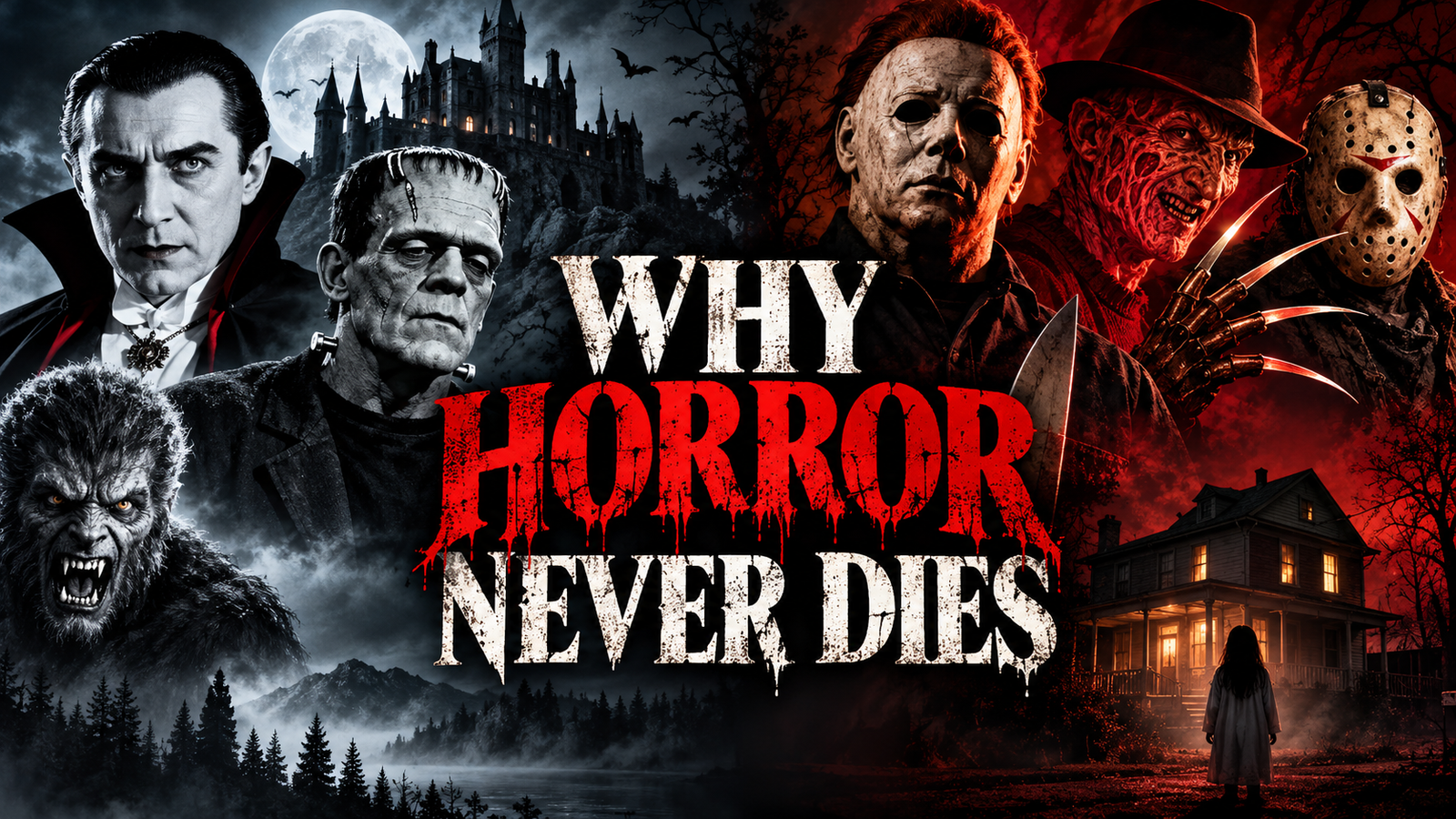
From Dracula and Frankenstein to Michael Myers, Freddy Krueger, and the terrifying creatures of modern cinema, horror continues to reinvent itself while tapping into the fears that have haunted humanity for generations.
And when the nightmare is over?
We want more.
Horror has survived every major transformation in entertainment, from silent cinema and black-and-white monster movies to drive-in slashers, supernatural blockbusters, streaming sensations, and independent films made on shoestring budgets.
Other genres rise and fall with changing tastes. Horror simply changes its face.
The monsters may look different, but the fears behind them remain remarkably familiar.
The Monsters That Started It All
Long before masked killers stalked suburban neighborhoods, horror belonged to creatures that represented humanity’s deepest anxieties.
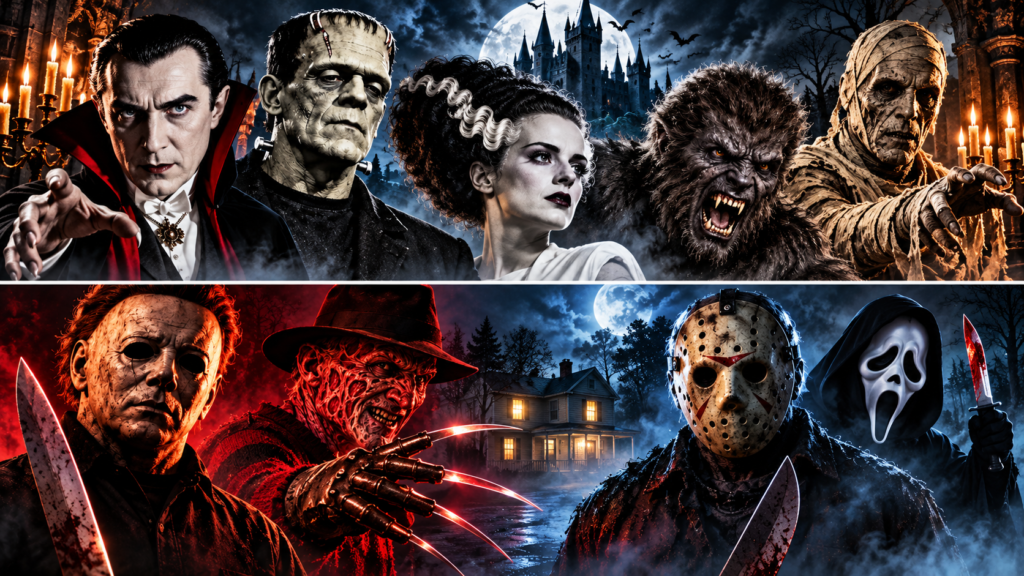
Dracula embodied the fear of death, seduction, and the unknown. Frankenstein’s monster forced audiences to confront the consequences of scientific ambition and the cruelty of rejection. The Wolf Man transformed the struggle between civilization and our animal instincts into a terrifying physical reality.
These weren’t merely frightening characters. They were reflections of the societies that created them.
And nearly a century later, their influence remains impossible to escape.
By the late 1970s and 1980s, horror had discovered something even more disturbing than ancient castles and supernatural legends.
The ordinary American neighborhood.
Films like Halloween transformed familiar streets and suburban houses into hunting grounds. Michael Myers didn’t need elaborate explanations or supernatural mythology to become terrifying. His silence, relentless movement, and blank expression were enough.
Then came Friday the 13th and the enduring legend of Jason Voorhees.
And Freddy Krueger took the nightmare somewhere audiences couldn’t escape: their dreams.
The slasher era understood a fundamental truth about fear. Sometimes the most terrifying thing isn’t a monster from another world.
It’s the possibility that danger is already standing outside your bedroom door.
Horror Gets Inside Our Heads
As audiences became accustomed to blood, masks, and jump scares, filmmakers found new ways to disturb them.
Psychological horror shifted attention from what audiences could see to what they couldn’t fully understand.
Was the threat supernatural? Was someone losing their mind? Could the characters trust their own memories, senses, or families?
Movies such as The Shining, The Sixth Sense, Hereditary, and The Babadook demonstrated that terror doesn’t always require a monster leaping from the shadows.
Sometimes grief, guilt, isolation, and uncertainty are frightening enough.
The best psychological horror doesn’t end when the credits roll. It follows you home.
The New Generation of Nightmares
Modern horror has become a remarkably diverse creative playground.
Found-footage films can make audiences feel as though they’re witnessing something forbidden. Elevated psychological horror explores complicated human emotions. Creature features continue to introduce strange new threats, while independent filmmakers experiment with unusual storytelling techniques and visual styles.
And horror no longer belongs exclusively to Hollywood.
Streaming platforms, digital distribution, independent productions, and international filmmaking have made it possible for disturbing new visions to reach audiences around the world.
The next iconic monster could come from a major studio.
Or it could emerge from a filmmaker working with a small cast, a single location, and an idea so frightening that audiences can’t stop talking about it.
Why We Keep Coming Back
Perhaps the greatest mystery of horror isn’t why people fear monsters.
It’s why we love them.
Horror offers something few other genres can deliver: the chance to confront danger without actually experiencing it.
For ninety minutes, we can face death, evil, isolation, madness, and the supernatural. We can scream, laugh nervously, cover our eyes, and feel our hearts racing.
Then the lights come on.
We’re safe.
But something inside us has changed, even if only for a moment.
That emotional experience is what keeps horror alive.

The Next Horror Icon Is Waiting
Every generation believes its monsters are the most terrifying.
Yet horror history tells a different story.
Dracula gave way to Frankenstein’s monster. The Universal Monsters inspired generations of filmmakers. Slashers created their own unforgettable villains. Supernatural thrillers, possession stories, found-footage nightmares, and psychological horror expanded the possibilities even further.
Somewhere, right now, another filmmaker is imagining a creature nobody has seen before.
A monster with a new silhouette. A disturbing origin. A presence that audiences will recognize instantly.
Will it become the next Freddy Krueger or Michael Myers?
Nobody knows.
But one thing is certain.
As long as humanity has fears, horror will have stories to tell.
And the monsters?
They’re never really gone. They’re just waiting for the darkness.