
Horror has never existed in a vacuum. Despite its reputation as escapist entertainment or shock driven spectacle, horror has always worked as a social pressure valve, absorbing collective anxieties and reshaping them into something the audience can face. Sometimes in the dark. The monsters we fear, the stories we return to and the images that linger long after the credits roll are rarely random. They were born from specific moments in history, forged by social unease and molded by what a generation is most afraid to say out loud.
Across decades, horror has shifted forms as society itself has shifted. Sometimes fear manifests as towering creatures and gothic nightmares, other times it creeps inward, becoming psychological, domestic and intimate. By tracing horror through the broad social eras rather than rigid decades, patterns emerge, revealing that every monster makes sense once you realize the world that created it.
Broken Words and Tragic Monsters (1920s-1940s)
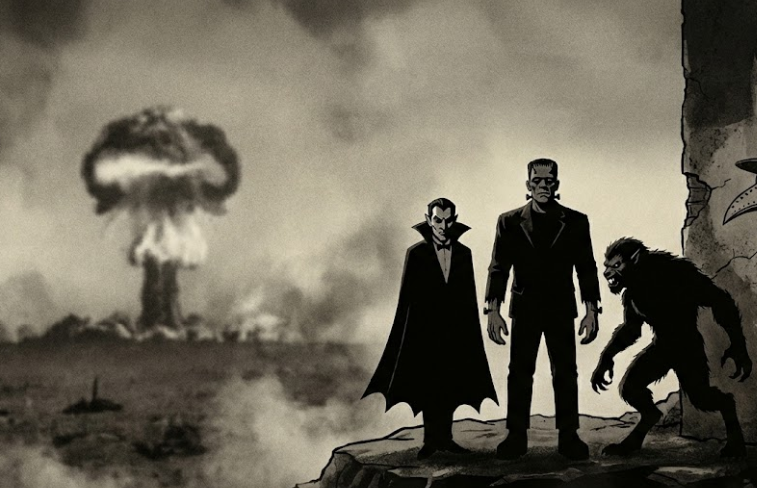
Early cinematic horror emerged from a world that had learned, painfully, that progress did not guarantee safety. World War I introduced industrialized slaughter on a scale that shattered faith in modernity. The Great Depression followed, reinforcing the idea that systems built to sustain life could just as easily abandon it. Horror during this period did not rage or revolt – it mourned.
The monsters of the era were not embodiments of pure evil, but consequences. Frankenstein’s monster reflected the fears surrounding unchecked scientific ambition. A being stitched together from the dead and animated without regard to the moral cost. Dracula, foreign and invasive, embodied anxieties about contamination, corruption and unseen threats crossing the border. The Wolf Man, cursed rather than malicious, mirrored fears of losing control of one’s nature in a world that demanded brutality to survive.

World War II shattered any remaining illusions. The mechanized efficiency of the genocide. The death camps, the starvation, death on a monstrous scale and the detonation of nuclear weapons reframed fear entirely. The bomb did not merely destroy cities, it introduced the idea of instantaneous, invisible annihilation. Humanity had proven itself capable of erasing itself with a single decision. Science was no longer reckless; it was apocalyptic.
Late-era horror absorbed this knowledge quietly. The monsters became warnings rather than curiosities. Bodies were fragile, disposable. Easily erased. Horror reflected a world that had crossed a threshold and could not return, haunted by the understanding that the most terrifying thing on Earth was not supernatural. It was human ingenuity unrestrained by conscience.
Paranoia and The Invisible Enemy (1950s – Mid 1960s)
The atomic age did not bring peace, it brought dread. With nuclear annihilation and Cold War tensions escalating, fear shifted from visible devastation to constant anticipation The enemy was no longer marching across borders, it was ideological, invisible and potentially even inside the home. Horror adapted accordingly.
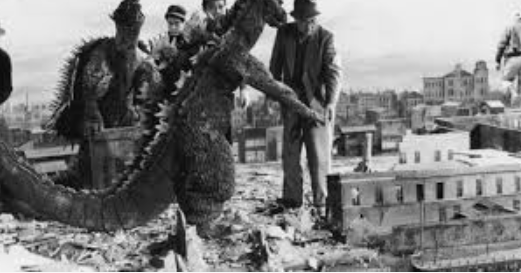
Films like Invasion Of The Body Snatchers captured the terror of replacement rather than invasion. The fear was not death but erasure. It was the loss of individuality beneath the heavy hand of enforced conformity. Godzilla, born directly from nuclear trauma, transformed atomic power into an unstoppable force, nature itself mutated by human arrogance. Even alien invasion narratives reflected a society conditioned to expect destruction without warning.
This era’s horror was shaped by suspicion. Neighbors, coworkers, even family members were not to be trusted. The bomb did not need to fall for fear to take hold. Its mere existence poisoned everyday life. Horror responded by making normality itself threatening, suggesting that safety was an illusion and vigilance a necessity.
When Society Fails – Horror Turns Human (Late 1960s-1980s)
By the late 1960s, faith in authority had collapsed completely. Vietnam, political assassinations, civil rights violence and government deception dismantled the idea that institutions existed to protect the public. Horror responded by abandoning the metaphor and confronting audiences with something far more terrifying than monsters: reality.
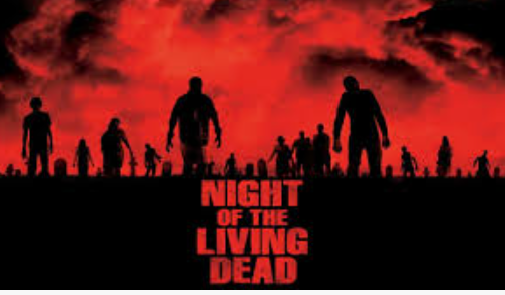
Night Of The Living Dead reframed horror as societal collapse,exposing racial tension and moral failure beneath apocalyptic imagery. The Texas Chainsaw Massacre stripped away fantasy altogether, presenting violence as senseless, exhausting and entirely plausible. These films offered no reassurances, no heroic resolution, only survival.
The atomic anxiety of earlier decades did not disappear; it mutated. By the 1980s, fear turned inward, manifesting as paranoia about the body itself. The Thing transformed Cold War distrust into physical violation, where identity could be consumed and replaced from within. A Nightmare On Elm Street destroyed the final refuge of safety by invading sleep, suggesting that even rest was dangerous.
Horror during this era was confrontational and merciless. It reflected a society that believed evil could not be contained or negotiated with. The terror was no longer external. It was systematic. Intimate and inescapable.
The Self Under Siege (1990s-Present)
As the twentieth century closed, fear adapted once more. Media saturation, internet anonymity and constant surveillance blurred the lines between reality and performance. Horror became self aware, reflecting a culture obsessed with watching itself unravel.
Scream dissected the genre’s own rules, exposing how violence had become entertainment. The Blair Witch Project exploited fears of authenticity, presenting terror as raw, disorienting and unresolved. Audiences were no longer passive observers, they were participants, complicit in the spectacle.

Post 9/11 and into the 2010s, horror grew quieter but more invasive. Films like The Babadook and Hereditary framed trauma as inherited and unavoidable. Get Out weaponized politeness, exposing how systematic violence hides beneath social rituals. Fear no longer needed monsters, it thrived in families, communities and institutions.
Pandemic, political polarization and social isolation further internalized horror. Modern fear is not loud or explosive, it is persistent, intimate and psychological. The threat is not invasion or annihilation, it is disconnection, identity loss and the realization that society may no longer function as a whole.
Conclusion – Monsters Always Make Sense
Horror does not predict catastrophe. It reflects it. Every era creates the monsters it understands the most, shaped by its anxieties and failures. When society fears invasion, horror gives us aliens. When trust erodes, it gives us neighbors. When identity fractures, it gives us ourselves.
The evolution of horror gives us an uncomfortable truth: the genre grows more internal as society grows more uncertain. The monsters become quieter, closer and harder to escape. Strip away the shadows and spectacle and what remains is a mirror. Sometimes distorted. Sometimes shockingly clear.
The monsters change but the fear endures.