
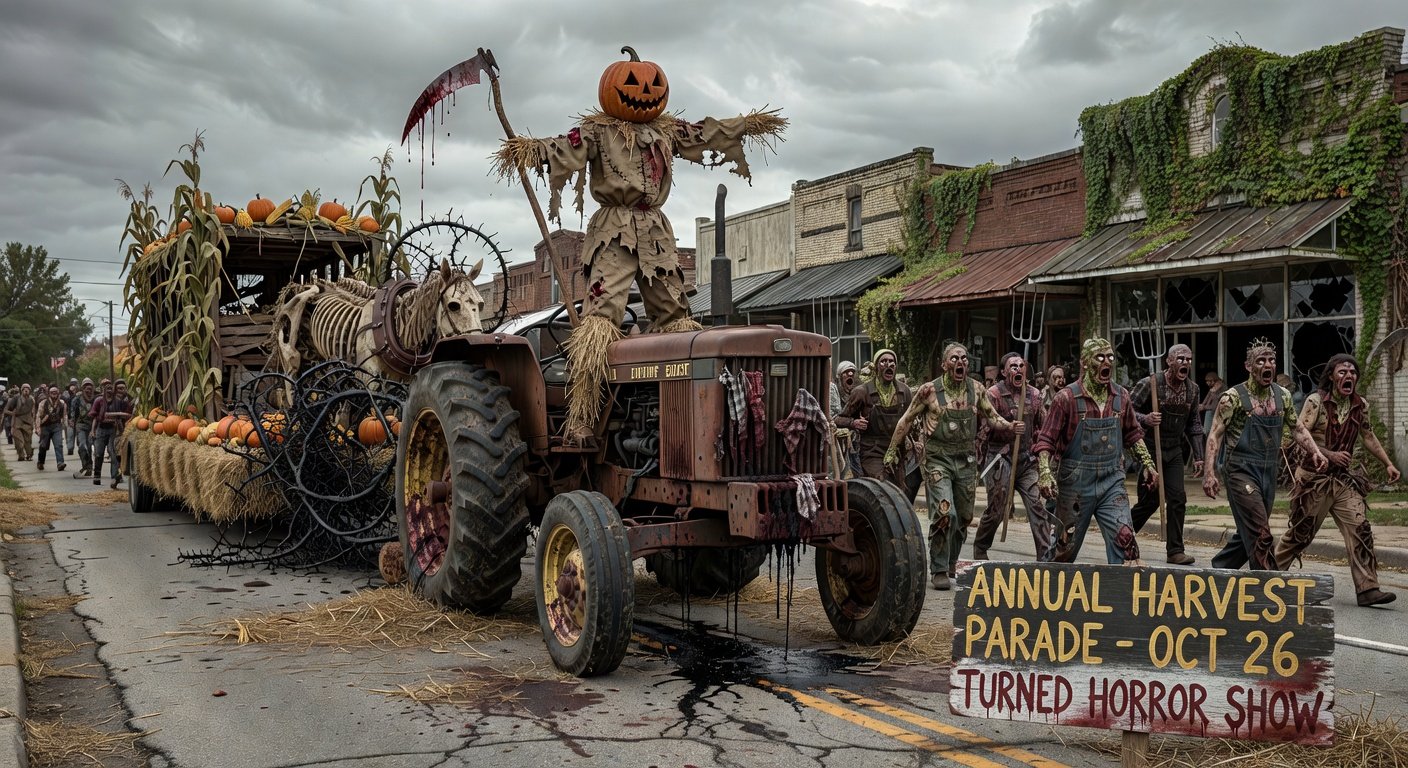
In the small town of Willow Creek, the annual Harvest Parade was a beloved tradition, drawing townsfolk and visitors from miles around. Colorful floats adorned with fresh pumpkins, hay bales, and autumn foliage wound their way down Main Street, accompanied by lively music and the laughter of children.
This year, however, a strange air hung over the festivities. The eerie chill of autumn seemed to whisper secrets, and shadows stretched longer than usual. As the sun dipped below the horizon, fiery hues painted the sky, but a pressing darkness crept in as if nature itself had forgotten the warmth of the day.
As the clock struck seven, the parade began. The first float, a whimsical depiction of a harvest feast, rolled by, and cheers erupted. But as the hours passed, the atmosphere shifted. A jagged, unexpected float appeared at the end of the line, its ominous black and crimson colors stark against the surrounding cheer. It was an eerie homage to Halloween, displaying grotesque decorations of twisted faces and skeletal hands reaching out from the sides.
Children giggled nervously, while adults exchanged wary glances. Just as the festive music faltered and the sound of eerie, low drumming surged from the float, a chilling wind swept through the street, carrying with it the scent of decay. The lanterns lining Main Street flickered ominously, casting shadows that danced like specters in the twilight.
As the float neared, what seemed to be costumed performers began to emerge—except their smiles were unsettling and their movements jerky, almost mechanical. Their faces, painted in unnatural hues, masked any hints of humanity. The crowd gasped as the once-cheerful parade transformed into something nightmarish. The drumming intensified, a rhythm that seemed to beat in sync with the rising dread in their chests.
Then, a piercing shriek cut through the commotion. A woman who had been laughing just moments ago fell silent, a look of frozen horror etched across her face. The townsfolk turned to find shadows advancing, twisting from the float and mingling among them, enveloping the crowd in a claustrophobic darkness.
People began to scream, a cacophony of panic erupting as the marching figures descended upon them, reaching out with skeletal hands. Those closest to the float stumbled back, some tripping over their own feet, desperate to escape the encroaching tide of terror. The vibrant autumn scenery faded into a pale backdrop, the laughter replaced by desperate cries.
A child clutched their mother’s hand, eyes wide with terror as they watched the horror unfold. The performers from the float shed their playful disguises, revealing themselves as something more sinister—a gathering of spirits angry over the town’s forgotten rituals, seeking revenge against the living for their ignorance.
In a frenzy, the crowd scattered, abandoning their festive dreams. The road, once alive with joy, became a battlefield of chaos. The last gleaming lights of the parade dimmed, and the thrill of the season was reduced to pandemonium.
Just as it begun, the parade ended in an eerie hush, leaving only whispers of what had transpired. With the dawn came an unnerving silence, as the people of Willow Creek awoke that morning—some missing, others forever changed, haunted by the knowledge that their revelry had awakened something deep within the earth, something that would not be forgotten.
And as for the parade? Legends spread that it would return, a harbinger of fear woven into the town’s fabric, a reminder that joy could easily morph into horror under the right conditions.