

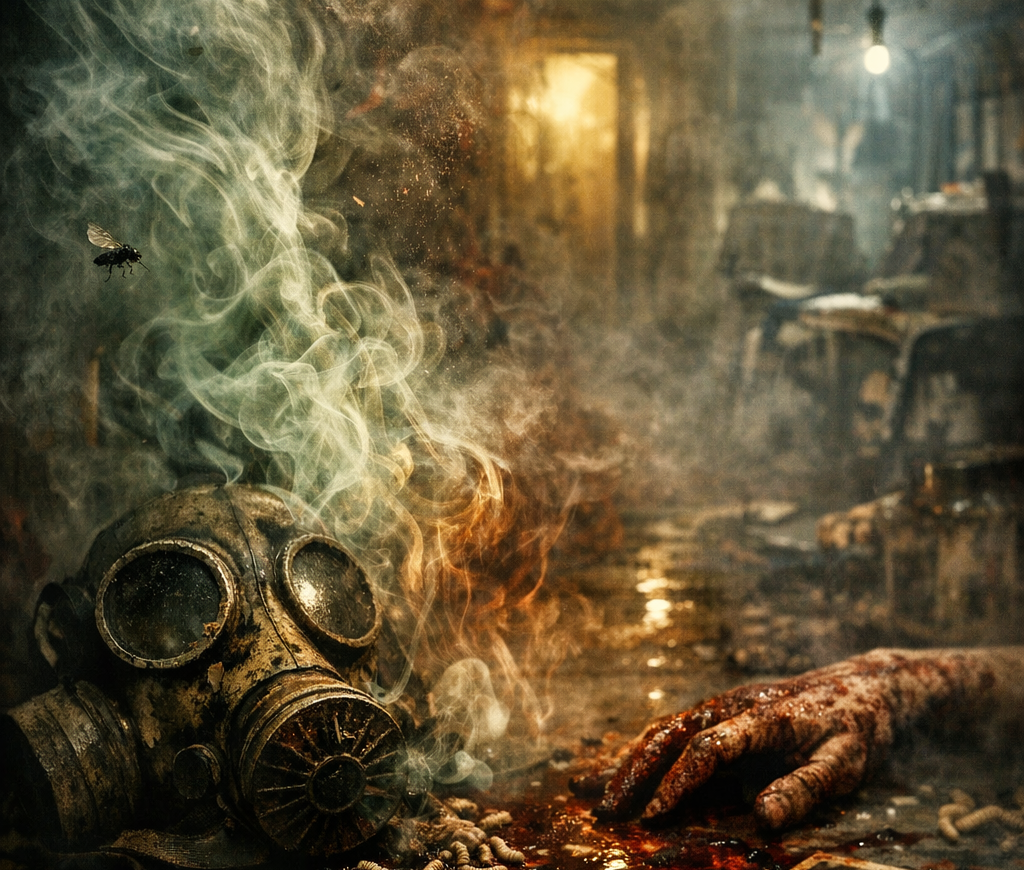
The smell of sci‑fi horror is the first warning that the future has gone wrong. Long before the alarms blare or the lights flicker, scent slips through the cracks—quiet, insistent, impossible to ignore. It’s the one sense that technology can’t sterilize, the one signal that still belongs entirely to the body.
The Mechanical Stench of a Dying Future
In deep space, horror often begins with the smell of failure.
Recycled air aboard a starship is supposed to be neutral, almost flavorless. When it changes, even slightly, every trained instinct snaps awake. A faint ozone bite means circuitry is overheating. A warm, plasticky scent means a console is melting from the inside. A metallic tang drifting through the vents suggests coolant is leaking—an invisible, lethal fog.
These smells are the ghosts of machines, the dying breaths of systems designed to keep you alive. When they sour, you know something is coming, and it’s coming fast.
The Organic Unknown
Then there are the scents no engineer can explain.
A wet, fungal musk blooming in the corners of a terraforming outpost. A sweet, cloying odor that doesn’t match any cataloged lifeform. A coppery trace of blood in a sealed habitat where no human has been injured.
In sci‑fi horror, smell becomes a message from the alien—an announcement that something has crossed into human territory. It’s the scent of biology that doesn’t belong, of evolution that took a different path, of a presence that doesn’t care whether you understand it.
Sometimes the smell is faint, almost polite. Sometimes it’s overwhelming, as if the creature is marking the space the way predators do. Either way, it tells you the same thing: you are not alone.
When Cleanliness Becomes Terrifying
The future is supposed to be pristine. Laboratories gleam. Cryosleep chambers hum with cold sterility. Medical bays smell of disinfectant and nothing else.
So when something disrupts that purity, the effect is immediate and chilling.
A cryopod that smells faintly of warm breath. A lab filled with the earthy scent of soil from a planet no one has visited. A corridor where the air is too sweet, as if something is trying to mask its own presence.
These contradictions are the essence of sci‑fi horror: the collision of the clinical and the biological, the engineered and the feral.
The Scent of the Void
Space itself has a smell—astronauts describe it as burnt metal, welding fumes, or seared steak clinging to their suits after a spacewalk. In fiction, that scent becomes a harbinger. When it drifts into a ship’s interior, it means the vacuum has found a way in. It means the boundary between life and nothingness is thinning.
And sometimes, the void brings something with it.
Why Smell Matters in Sci‑Fi Horror
Sight can deceive. Sound can be explained away. But smell is primal. It bypasses logic and hits the survival centers of the brain. In a futuristic setting—where sensors, scanners, and AI systems are supposed to detect every threat—smell becomes the one warning sign that can’t be dismissed.
It’s the universe whispering that something is wrong. That something is coming. That something is already here.