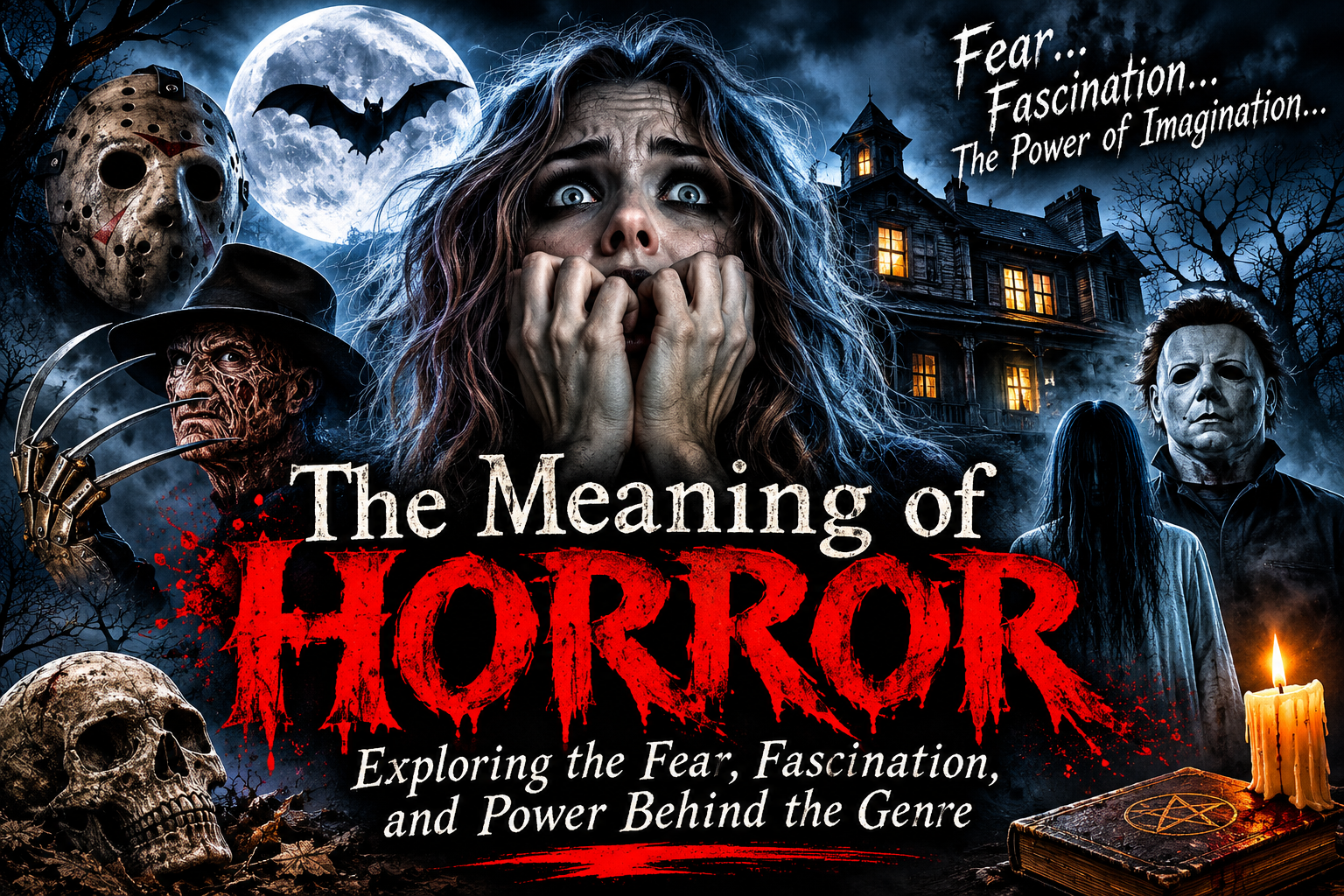
Horror is much more than monsters lurking in the darkness, terrifying creatures, haunted houses, or frightening moments on a movie screen. It is an exploration of the human imagination, our deepest fears, and the mysterious things we cannot always explain. For generations, horror has captivated audiences by taking them into worlds where the unexpected becomes reality and the ordinary can suddenly become extraordinary.
But what does horror really mean?
At its heart, horror is an emotional experience designed to create fear, suspense, uneasiness, and anticipation. It challenges our sense of security and invites us to confront the unknown. Whether through supernatural forces, psychological mysteries, terrifying creatures, or realistic human villains, horror taps into emotions that are deeply rooted in the human experience.
The Origins of Fear
The fascination with horror is nothing new. Long before motion pictures, people gathered around fires to tell stories about ghosts, spirits, monsters, unexplained events, and mysterious creatures. Folklore, mythology, and ancient legends often explored the battle between good and evil, life and death, and the known and unknown.
These stories served as entertainment, but they also reflected the fears, beliefs, and cultural traditions of the people who told them.
As literature evolved, horror became a powerful storytelling genre. Writers such as Edgar Allan Poe, Mary Shelley, and Bram Stoker helped shape the foundation of modern horror through unforgettable tales of psychological terror, scientific nightmares, and supernatural legends.
Eventually, cinema brought those frightening imaginations to life, allowing audiences to experience horror in an entirely new way.
Why Are We So Fascinated by Horror?
One of the most interesting questions about horror is why people willingly seek out something designed to frighten them.
The answer lies in the experience itself. Horror allows audiences to explore fear from a safe distance. Viewers can experience suspense, surprise, mystery, and emotional intensity while knowing they are watching a fictional story.
There is also something fascinating about the unknown. People are naturally curious about mysteries, unexplained phenomena, supernatural possibilities, and the darker corners of human imagination.
Horror gives those curiosities a place to exist.
Horror Is More Than Monsters
Although monsters, vampires, werewolves, zombies, and other terrifying creatures have become iconic symbols of the genre, horror is not limited to supernatural storytelling.
Psychological horror explores the human mind, paranoia, isolation, and uncertainty. Paranormal horror examines ghosts, unexplained events, and supernatural encounters. Creature features introduce audiences to extraordinary beings, while science-fiction horror explores the frightening possibilities of technology, space, and scientific discovery.
Some of the most effective horror stories do not rely on monsters at all. Sometimes the greatest fear comes from human behavior, unanswered questions, or the realization that something familiar is not what it appears to be.
The Many Faces of Horror
Horror continues to evolve because fear itself is constantly changing. Each generation discovers new ways to explore frightening ideas and bring fresh nightmares to life.
From classic black-and-white monster movies to modern supernatural thrillers, independent horror productions, and elaborate cinematic universes, the genre offers something for every kind of fan.
Horror can be disturbing, mysterious, entertaining, imaginative, thought-provoking, and even humorous. It can challenge social expectations, explore human emotions, and tell stories that stay with audiences long after the final scene.
The True Meaning of Horror
Ultimately, horror is about the power of imagination and the emotions that make us human. It allows storytellers to explore the boundaries between reality and fantasy, courage and fear, and the familiar and the unknown.
It reminds us that sometimes the most frightening things are not what we see, but what we imagine might be waiting just beyond our understanding.
For horror fans, the genre is more than entertainment. It is an appreciation for storytelling that dares to be different, creativity that pushes boundaries, and worlds where absolutely anything can happen.
Horror takes us into the darkness, challenges our imagination, and reminds us why we love a really good scare.
Because in the world of horror, fear is only the beginning of the story.