
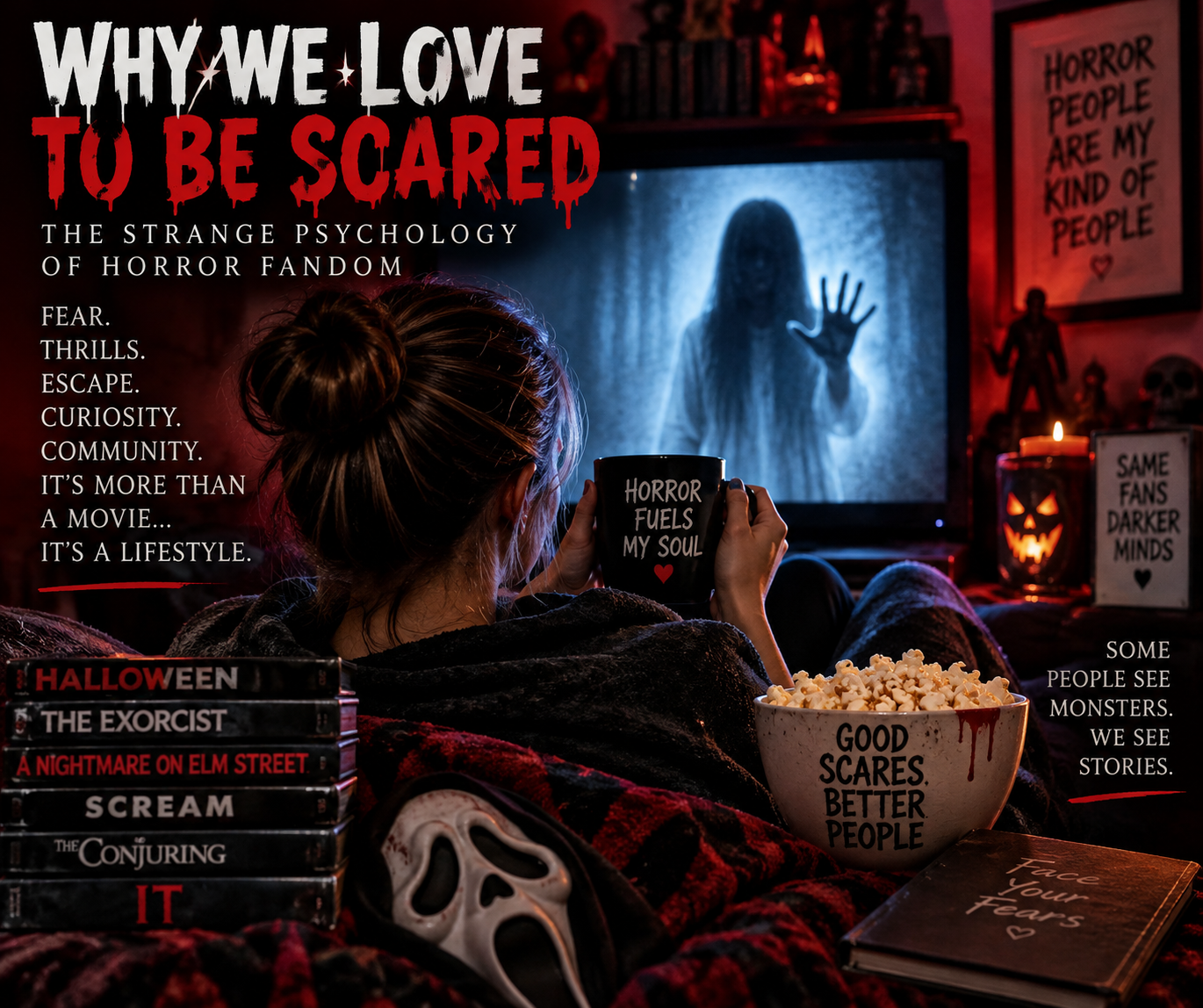
There’s something fascinating about horror. We know the creature is coming. We know the music is warning us. We know the door probably shouldn’t be opened—and yet we keep watching.
For millions of fans, horror is more than a movie genre. It’s an experience. It creates anticipation, tension, surprise, and ultimately relief, all from the safety of a theater, bedroom, or living room. But what makes people come back for another scare once the credits roll?
Fear Without Real Danger
One of horror’s greatest tricks is giving audiences the sensation of danger without actually placing them in danger. The brain reacts to what it sees and hears, even when we consciously understand that the threat is fictional.
A frightening scene can produce physical reactions such as a racing heart, heightened alertness, and a rush of adrenaline. Once the frightening moment passes, that tension can transform into excitement, laughter, or relief.
That emotional roller coaster is a major part of horror’s appeal.
The Pleasure of the Scare
Horror creates a unique combination of fear and fun. Viewers can experience intense emotions while knowing they are ultimately in a controlled environment.
This can make the genre especially attractive to people who enjoy:
· Adrenaline and suspense:The anticipation of what happens next keeps the brain engaged.
· Emotional release:Surviving a terrifying scene can create a powerful feeling of relief.
· Curiosity:Horror constantly raises questions—Who is behind the door? What happened here? Can the characters escape?
· The unexpected:Twists, surprises, and unpredictable creatures keep audiences guessing.
· Mastering fear:Watching a terrifying story from a safe environment can make the experience feel empowering.
In other words, horror allows audiences to flirt with fear without having to face an actual threat.
When Horror Becomes a Lifestyle
For dedicated fans, watching horror isn’t simply an occasional weekend activity. It can become part of their culture and identity.
Horror fandom stretches far beyond movies. It includes conventions, collectibles, costumes, books, podcasts, special effects, filmmaking, artwork, haunted attractions, online communities, and endless discussions about favorite villains and legendary films.
The deeper someone travels into the genre, the more there is to discover.
For some fans, horror becomes a creative outlet. For others, it becomes a community where people can share an interest that might not be understood by everyone around them.
Why Some People Want Bigger Scares
Experienced horror fans sometimes develop a greater tolerance for frightening material. Once familiar scares stop producing the same reaction, viewers may become interested in different styles of horror rather than simply seeking something more extreme.
Psychological horror, supernatural stories, creature features, paranormal mysteries, dark fantasy, science fiction horror, and survival thrillers can all provide completely different experiences.
That’s one reason the genre continues to reinvent itself.
When the Darkness Isn’t Fun Anymore
Horror isn’t necessarily relaxing for everyone. Certain stories or images can be upsetting, particularly when they connect with personal fears or difficult experiences.
A frightening movie may occasionally contribute to:
· Trouble falling asleep
· Temporary anxiety or uneasiness
· Disturbing dreams
· Fear surrounding situations portrayed in the film
· Emotional discomfort from particularly intense subject matter
Knowing your own boundaries is part of being a smart horror fan. You don’t have to watch something simply because everyone else is watching it.
Is Horror Actually Addictive?
Calling horror an “addiction” isn’t medically accurate in the clinical sense. Enjoying horror repeatedly doesn’t automatically mean someone has an addiction.
However, the genre can certainly become a powerful habit or ritual. Friday-night horror marathons, annual Halloween viewings, midnight premieres, convention weekends, and debates over the next great monster can become traditions that fans eagerly anticipate.
What looks like an obsession from the outside may simply be a deep fascination with storytelling, suspense, imagination, and the human fascination with the unknown.
The Take
The real magic of horror may be that it lets us confront fear from a place of safety.
Every monster represents something. Every haunted house has a mystery. Every dark hallway creates a question. And every survivor reminds us that fear doesn’t always have the final word.
Maybe that’s why we keep coming back.
We aren’t necessarily addicted to being frightened.
We’re fascinated by what fear reveals about us.