

Every generation of horror fans has its icons. Dracula stalks the dark castle. Freddy Krueger invades our dreams. Jason lurks at Camp Crystal Lake and Michael Myers silently awaits in the shadows. Yet before horror gave us unforgettable villains, it gave us something far more terrifying – the natural world.
Long before the first horror novel was ever written, people feared the earth beneath them, the water surrounding them, the fire that could consume them and the air they depended on to breathe. Ancient civilizations viewed these four classical elements as the building blocks of existence. They created life but they could just as easily take it away.

Horror has never forgotten that lesson.
The genre thrives on reminding us that humanity’s greatest enemy isn’t always supernatural. Sometimes it’s the cave that collapses or the ocean that refuses to give us back. Sometimes it’s the wildfire racing over the horizon and sometimes it’s the invisible poison carried on the wind.
Unlike ghosts or monsters, the elements don’t hunt us out of malice. They are indifferent. That indifference may be the most frightening quality of all.
Earth: Where Fear Takes Root
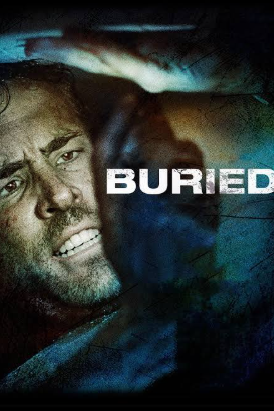
Earth is supposed to represent safety. It supports our homes. It grows our food and gives us a place to stand. Horror, however, strips away that comfort and reveals what lies beneath. From deep caves to forgotten mines and dense forests where people vanish without a trace, the ground beneath our feet can become as frightening as any monster. Few films capture this better than Buried (2010), which proves that terror doesn’t require a supernatural threat when the earth itself becomes an inescapable prison. Ryan Reynolds spends more than seventy-five percent of the time in a coffin and audiences find themselves gasping for air right along with him.
Perhaps no fear is more universal than the fear of being buried alive. The claustrophobia. The darkness. The silence. It is also one of my personal phobias.
Other films ask an even darker question: What if the dead don’t stay buried? Pet Sematary (original, 1989 remake, 2019) transforms a simple burial ground into one of horror’s most memorable cursed locations. The earth becomes corrupted, returning loved ones to life, but stripped of their humanity. Instead of offering peace, the grave offers something far worse. King’s story reminds us that some graves are meant to remain undisturbed and that the greatest horrors often begin with our refusal to let go of the dead. Earth represents inevitability. Every civilization has buried their dead because every civilization understands one uncomfortable truth – we all return to the ground eventually.
Earth represents confidence. Horror exploits that certainty by transforming the place where we expect eternal rest into a source of fear. Whether it’s a collapsing tunnel, a forgotten graveyard or a wilderness that devours those who wander too far, the earth reminds us that some of our oldest fears have always been waiting just below our feet.
Water: Terror Beneath The Surface
If earth traps us, then water swallows us. Humans are naturally drawn to lakes, rivers and oceans. We vacation beside them, build cities around them and depend on them for survival. Yet beneath every calm surface lies an unsettling mystery. Our eyes cannot penetrate deep water, allowing our imagination to fill the darkness with unseen horrors. No film captured this horror better than Jaws (1975). By keeping the shark hidden for much of the film, Steven Spielberg proved that what we can’t see is often far more terrifying than what we can.
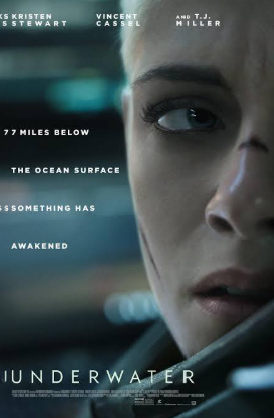
Water is unique because it conceals danger until the last possible moment. A predator can approach unnoticed, a powerful current can drag away even a strong swimmer and a sudden storm can turn paradise into a nightmare. Open Water (2003) demonstrates this brilliantly by replacing the traditional horror monsters with endless isolation and the unforgiving sea. Likewise, Underwater (2020) traps its characters under crushing ocean pressure. While The Fog (1980) uses the sea as a conduit for ghostly revenge. In each case, the water itself becomes as threatening as anything hidden within it.
Beyond its physical dangers, water has always carried symbolism in horror. It washes away evidence, hides secrets and preserves the past beneath its waves. Rivers carry away blood, swamps conceal bodies and lakes guard tragedies that refuse to stay buried. In horror, calm water is rarely just water, it is a veil hiding something unknown. That uncertainty is what makes the element so enduring, reminding us that the greatest fears often lie just beyond our sight.
Fire: The Great Destroyer
Few forces in nature command our attention like fire. It provides warmth, light and protection, yet the moment it escapes our control, it becomes one of the most destructive elements on Earth. Fire is mesmerizing because it is both beautiful and deadly, drawing us in before revealing its true power. Horror has long used this contradiction to symbolize punishment, vengeance and chaos.
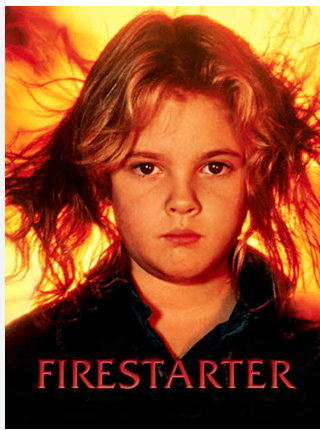
No horror icon embodies that symbolism better than Freddy Krueger. Introduced in A Nightmare On Elm Street (1984), the horribly burned killer became one of the defining villains of the 1980s. His scarred flesh serves as a constant reminder of the fire that created him, transforming flames from a source of destruction into the birth of something terrifying. While Freddy represents fire’s power to scar and corrupt, Firestarter (original 1984, remake 2022) explores a different side of the element. Charlie McGee’s terrifying pyrokinetic abilities turn fire into an uncontrollable extension of emotion, proving that the greatest danger isn’t always the flame itself, but the person who can unleash it. Films like The Burning (1981) remind us that one horrific encounter with fire can leave physical and psychological scars that last a lifetime.
Beyond its destructive power, fire carries deep symbolic meaning in horror. It has long represented Hell, purification and humanity’s attempt at destroying evil. Angry mobs carry flame torches to hunt monsters, witches are condemned to the flames and others think that the only way to survive is through the inferno. Yet horror repeatedly reminds us that some evils survive the blaze, leaving behind only ash, scars and the haunting realization that destruction rarely brings true peace.
Air: The Invisible Threat
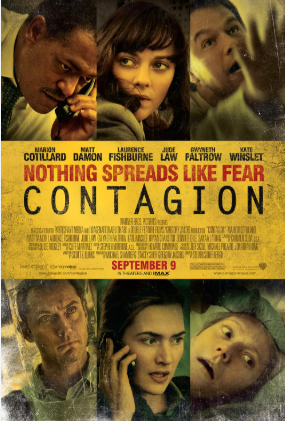
Air is perhaps the most overlooked of the four elements because we rarely think about it. Every breath is taken without hesitation, an unconscious act of trust that the world around us is safe. Horror thrives on breaking that trust. Unlike earth, water or fire, air is invisible, making it impossible to see the danger until it’s already upon us. Few films capture this vulnerability better than Contagion (2011), where an airborne virus transforms something as ordinary as breathing into a source of fear. The film’s true horror lies in its realism, reminding us that the ordinary air we depend on can become an invisible pathway for death.
The wind itself has also become an effective tool of horror. In The Wind (2018), relentless gusts sweeping across the isolated frontier blur the line between psychological horror and supernatural evil. Storms, thick fog, toxic smoke and poisonous gases all remind us that the very life sustaining air can become a weapon. Because the threat is often unseen, our imaginations fill the empty space with possibilities far worse than anything clearly revealed.
Air also shapes horror through sound as much as silence. A sudden stillness before a storm, the whistle of the wind through an abandoned building or the desperate gasp of someone struggling for breath can all create unbearable tension. Unlike the other elements, air often announces its presence without ever revealing itself. That unseen quality is what makes it so unnerving. We can escape rising flood water or outrun a wildfire but when the air itself becomes the enemy, there is often nowhere left to hide.
The Original Monsters
Long before horror introduced masked killers, haunted houses and supernatural creatures, it drew its inspiration from the world around us. The four classical elements have always sustained life, yet each possesses the power to destroy it just as easily. Earth can imprison us, water can swallow us, fire can consume us and air can betray us without warning.
Perhaps that is why elemental horror continues to endure. These aren’t fictional monsters confined to the pages of a novel or the scenes from a movie, they’re forces we encounter everyday. Horror simply reminds us that nature has always been capable of inspiring our oldest and most enduring fears.