

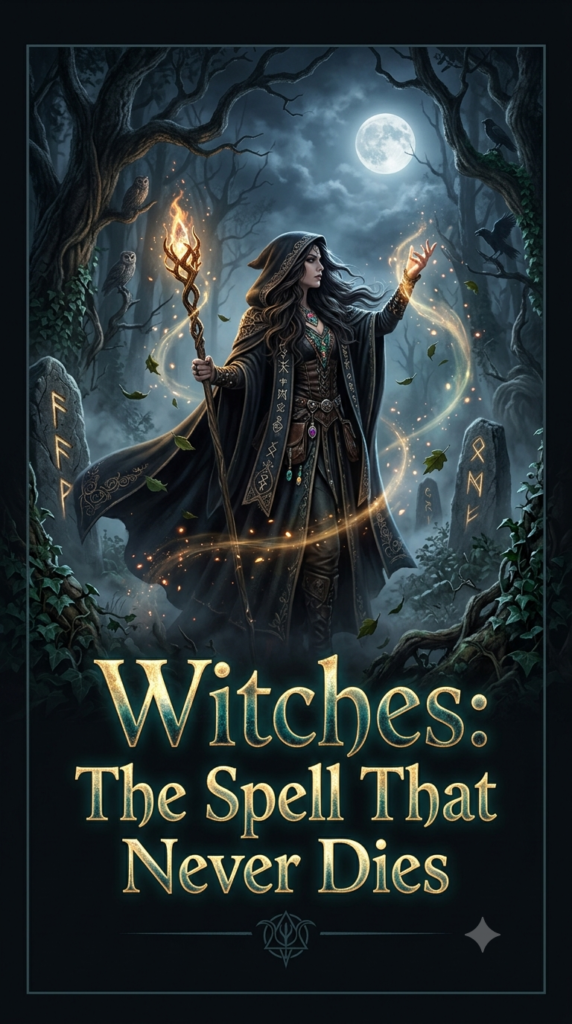
Few figures in horror have a history as old, and as complicated, as the witch. Long before they appeared in movies, witches haunted folklore, religious beliefs and the fears of ordinary people. They were blamed for sickness, failed harvests, deaths and misfortunes that had no other explanation. Whether they were viewed as servants of dark forces, practitioners of forbidden knowledge or simply outsiders feared by the community, witches became symbols of humanity’s fear of what could not be understood.
The fears surrounding the witch were not limited to stories. Throughout history, accusations of witchcraft led to imprisonment, torture and death. The witch trials of Europe and colonial America showed how powerful that fear could become. Combine that with the superstition and paranoia of the day and the hysteria only grew. Unlike many creatures in horror, witches were not born entirely from imagination. They were created from real fears that existed within society.
That connection to history is one of the reasons witches have remained such an influential figure in horror. They are not simply monsters hiding in the darkness. They represent the fear that something supernatural may already be hiding among us.
Why Witches and Folk Horror Still Terrify Us
Witches are frightening because their greatest weapon is not brute force, it is influence. It is manipulation. They corrupt and tempt. A monster may attack the body but a witch attacks the mind. She can turn friends against each other, destroy families or make people question what is real.
This fear has made witches a perfect fit for folk horror, a genre built around isolation, ancient tradition and the idea that the modern world may not be as safe as it seems. Deep forests, forgotten villages and old rituals become places where humanity’s control begins to disappear.

Folk horror often explores the fear that civilization has only buried older beliefs rather than destroyed them. Beneath every modern society may still exist forgotten customs, strange ceremonies and forces people no longer understand. The witch becomes the symbol of that hidden past returning.
This is what makes witches so effective in horror. They do not need to chase their victims. They wait, they influence. They manipulate and allow fear to grow until people begin to destroy themselves.
Witches On Screen
Few horror icons have evolved on screen as dramatically as the witch. Early films drew heavily from folklore, presenting witches as sinister figures of curses and magic. Haxan (1922) helped establish the eerie imagery surrounding witchcraft, while Mario Bava’s Black Sunday (1960) brought the witch into Gothic horror with its unforgettable tale of vengeance and the supernatural. Together, these films laid the foundation for decades of witch-centric horror.

The genre took a bold turn with Dario Argento’s Suspiria (original 1977, remake 2018), replacing the solitary crone with a powerful coven hidden in plain sight. Its dreamlike visuals and relentless atmosphere influenced countless supernatural films. More than twenty years later, The Blair Witch Project (original 1999, remake 2016) proved that a witch didn’t even need to be seen to terrify audiences. By relying on atmosphere and fear of the unknown, if forever changed how supernatural horror could be told.
Not every memorable witch story was pure horror. The Witches Of Eastwick (1987) mixed dark comedy with the supernatural, proving that witches could be playful, seductive and dangerous all at once. The Craft (1996) followed by bringing witchcraft into the lives of ordinary teenagers, blending coming-of-age drama with the temptation of power. Its impact reached far beyond horror, inspiring a generation of films and television series centered on modern, teen witches.
Recent years have brought the witch back to its darker roots. Robert Eggers’ The Witch (2015) embraced seventeenth century folklore and religious paranoia to create one of the most authentic depictions of witchcraft ever put on film. A year later, The Autopsy Of Jane Doe (2016) offered a chilling reminder that the witch legend still has room to evolve. It transformed an ordinary morgue into the setting for one of modern horror’s most unsettling supernatural mysteries.

The witch’s influence has never been limited to the movie theater. Television has embraced the archetype just as successfully, often reimagining it for an entirely new audience. The classic sitcom Bewitched (1964) proved that witches could be humorous and relatable. While Penny Dreadful (2014) returned them to the shadows, portraying them as ancient, sinister forces woven into its Gothic mythology. Following a different path, American Horror Story: Coven (2013) blended supernatural horror with modern themes of power, rivalry and survival, introducing witches to a new generation of horror fans. Together, these series demonstrate the incredible versatility of the witch, showing that she can be terrifying, sympathetic, humorous or all three at once.
Whether portrayed as an ancient evil, a hidden coven or an unseen force lurking just beyond our sight, witches continue to cast spells over audiences unlike any other monster in horror.
An Enduring Legacy
For centuries, witches have represented humanity’s fear of the unknown. They embody forbidden knowledge, temptation, isolation and the unsettling idea that evil doesn’t always announce itself. It can hide in plain sight. Unlike many horror monsters, witches are not confined to a single appearance or set of rules. They can be ancient crones, seductive enchantresses, secret covens or ordinary people corrupted by power.
That ability to evolve is what has kept witches relevant for generations. Every era reshapes the legend to reflect its own fears, allowing filmmakers to reinvent the witch without losing what made her frightening in the first place. Whether lurking in the shadows of folklore or casting spells across the silver screen, one thing remains certain: the witch’s place in horror is as powerful today as it was centuries ago.