
Every few years, Hollywood gives us another Dracula, another haunted doll, another werewolf, another demonic possession. While some of these films are fantastic, horror often returns to the same familiar monsters instead of exploring the rich folklore that has terrified cultures for centuries.
Across Europe, Asia and beyond, folklore is packed with creatures so disturbing they make modern movie monsters look tame. They aren’t misunderstood antiheroes or tragic villains. They’re embodiments of famine, disease, nightmares and humanity’s oldest fears. Yet for some reasons that are hard to explain, most have never received the big screen treatment they deserve.
The Nuckelavee
Imagine seeing something emerge from a bank of sea fog. At first, it looks like a horse. Then as it gets closer, you realize that the rider isn’t riding it at all. They are fused together. Neither has skin. Every muscle, tendon and vein is exposed, glistening as though they had just been peeled raw. This is the Nuckelavee, a nightmare born of the windswept Orkney Islands of Scotland. According to legend, its breath poisoned crops, spread disease and left livestock dead in the fields. It wasn’t hunting for food or revenge, it simply existed to bring misery wherever it walked.
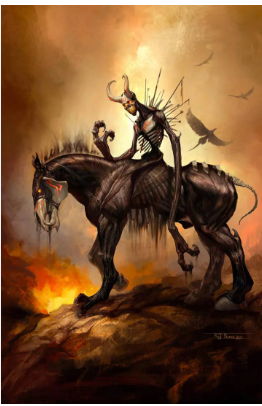
What makes the Nuckelavee so frightening is it cannot be reasoned with. It has no tragic backstory and no hidden humanity waiting to be discovered. It’s an unstoppable force of corruption and the physical embodiment of plague and despair. Modern horror often tries to explain its monsters, giving them motives audiences can sympathize with. The Nuckelavee doesn’t need one. Sometimes evil is the scariest when it simply is.
Movies like The Ritual (2017), The Witch (2015) and Pumpkinhead (1988) capture pieces of that ancient, folkloric dread but none feature a creature quite like the Nuckelavee. Imagine a slow burning horror film set on a remote Scottish island where the fog rolls in every evening, bringing with it something the villagers have feared for centuries. It’s the kind of nightmare that stays with you long after the credits roll.
The Aswang
Not every monster waits in the woods.
In the Philippines, generations have grown up with stories of the Aswang, a creature that looks perfectly ordinary during the day. It chats with neighbors, shops in the market, smiles politely and blends effortlessly into the community. When darkness falls, however, its true nature is revealed. Depending on the version of the legend, the Aswang transforms into a flesh eating predator or a vampire-like creature that stalks the villages under the cover of night. Some legends say the Aswang can separate parts of its body, taking on a more monstrous form as it hunts through the night. But most depictions portray the Aswang as a gaunt, bat-like demon with leathery wings, glowing eyes and elongated claws. A nightmarish appearance that couldn’t be further removed from the ordinary face it wears during the day. In all versions, the Aswang preys on the weak, the sick and the most vulnerable.
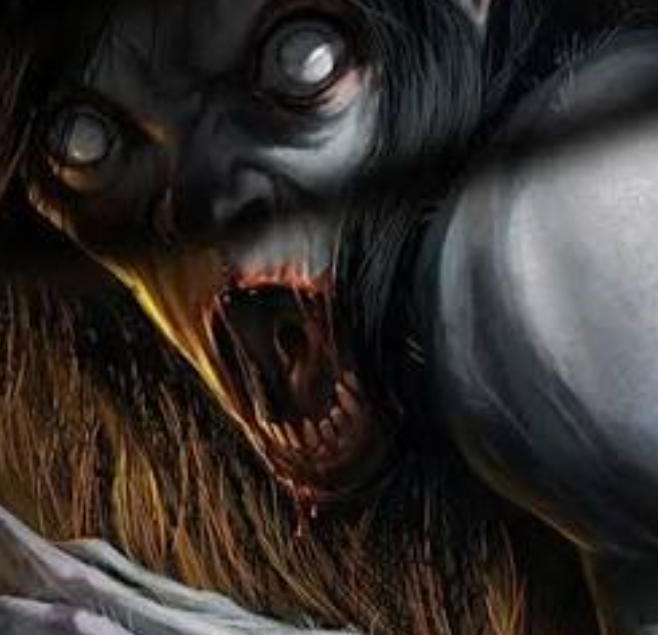
The horror isn’t in just what the Aswang does, it’s in who it could be. You don’t fear strange noises outside of your window. You fear the woman who waved at you that morning. You question the man who has lived next door to you for years. The legend turns trust into a weapon, forcing people to wonder whether the monster has been living among them all along.
Films like It Follows (2014), The Wailing (2016) and The Visit (2015) thrive on that creeping paranoia, where something feels deeply wrong long before the violence begins. The Aswang could take that idea even further, delivering a horror story built on suspicion instead of spectacle. Envision an entire village turning on itself, neighbors accusing each other. Friendships crumble, families become suspicious of one another and no one knows who can be trusted after sunset. By the time the audience would discover who the monster is, it would already be too late. That’s the kind of psychological horror that lingers and make you sleep with the light on.
The Redcap
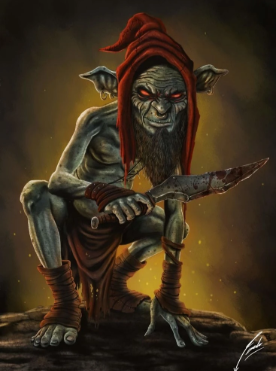
Scattered along the border of England and Scotland stand the ruins of castles that have witnessed centuries of warfare, betrayal and bloodshed. According to local folklore, some of those ruins are still occupied, not by ghosts but by something far more dangerous. The Redcap is a small wiry goblin-like creature with long crooked claws, razor sharp teeth and eyes that burn with malicious intelligence. Despite its small size, it possesses incredible strength and astonishing speed allowing it overpower victims many times larger than itself. It lurks in abandoned towers and crumbling fortresses, waiting patiently for an unlucky traveler to wander inside.
The creature gets its name from the blood soaked cap it wears upon its head. Legend says the cap must remain wet with fresh human blood. If it dries, the Redcap will weaken, forcing it to kill again and again to maintain its strength. Unlike many monsters born from curses or revenge, the Redcap has no tragic past and seeks no greater purpose. It murders because violence is simply its nature, making it one of folklore’s most cold-blooded predators.
Movies like Wrong Turn (original 2003, remake 2021), The Hills Have Eyes (original 1977, remake 2006) and The Descent (2005) prove audiences love love stories where entering the wrong place becomes a death sentence. The Redcap fits perfectly into that tradition while bringing centuries of folklore with it. Picture a group of explorers venturing into a forgotten forbidden castle, only to discover they are being hunted through narrow corridors and collapsing towers by a creature that has been feeding there for centuries. Replace another masked killer with an ancient blood soaked goblin, and you’ve got a horror villain unlike anything audiences have seen before.
Black Annis
Long before parents warned their children about strangers, many warned them about the Black Annis.
According to English folklore, Black Annis was an ancient blue-skinned hag with iron claws, tangled hair and glowing eyes. She was said to live in a cave called Black Annis’ Bower in the Dane Hills of Leicestershire, emerging after dark to stalk the countryside to snatch children and careless travelers. Some versions of the legend say she devoured children, while others claim she skinned them and wore their hides as clothing.
What makes the Black Annis particularly unsettling is how closely her legend is tied to the landscape. She isn’t a ghost haunting some distant castle or a demon summoned by a curse. She lived in a real cave and parents used her story to keep their children from wandering into the hills after dark. The idea of an ancient creature just beyond the edge of town gives the legend a primal quality that still works today.
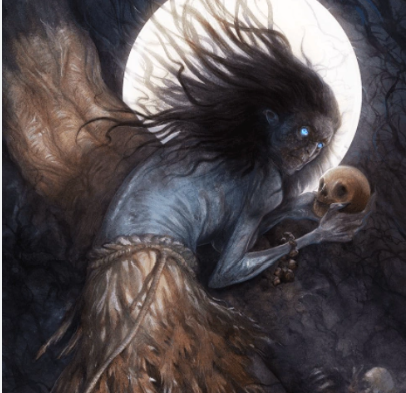
Movies like The Barbarian (2022), The Blair Witch Project (original 1999, remake 2016) and Mama (2013) have all played with fear of discovering something ancient hiding where it shouldn’t be. Black Annis could take that idea and turn it into something truly disturbing. Imagine hikers finding the entrance to her forgotten cave and laughing off the old legend. Only to discover strips of freshly peeled flesh hanging on a rope inside. Hollywood has spent years giving us new versions of the same monsters, yet this centuries old nightmare is still waiting in the dark.
Final Thoughts
Hollywood doesn’t need another Dracula. It needs to start looking beyond the monsters we already know. The Nuckelavee, Aswang, Redcap and Black Annis prove that some of the most disturbing horror stories have been waiting in folklore all along. These legends have survived centuries for a reason and maybe it’s time we let them out of the dark.