
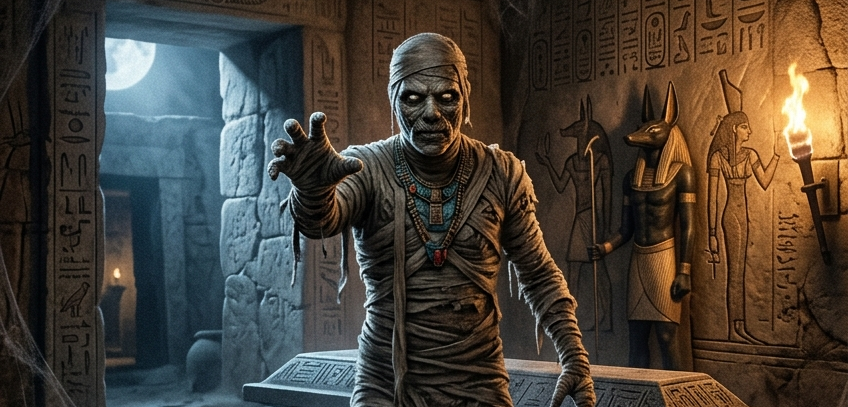
Wrapped in brittle linen and hidden behind centuries of decay, the mummy has haunted our imaginations for generations. Unlike many horror monsters, it doesn’t stalk the living out of hunger or bloodlust. It rises because something sacred has been disturbed. That simple idea has made the mummy one of horror’s most enduring figures, reminding us that some things were buried for a reason.
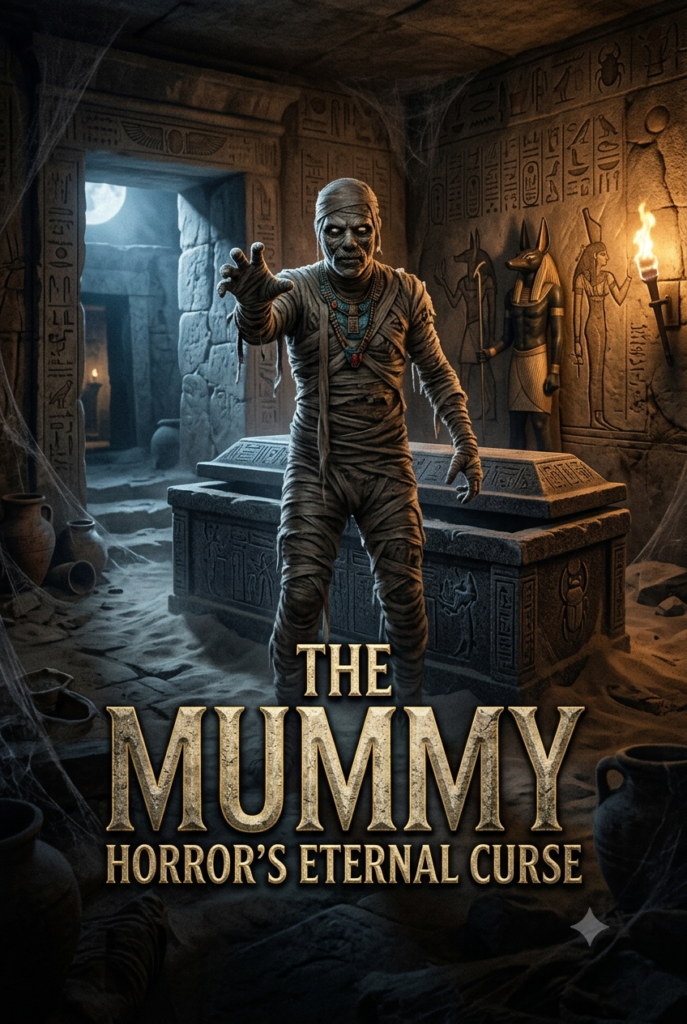
Ironically, real mummies of ancient Egypt were never meant to inspire fear. Mummification was an act of devotion, carefully preserving the body so the soul could journey to the afterlife. Tombs were built to protect the dead, not imprison monsters. It wasn’t until centuries later, when explorers and treasure hunters pried open forgotten burial chambers in search of wealth and curiosity, that the image of the cursed mummy began to take shape. What had once been sacred tradition slowly transformed into one of horror’s most recognizable legends.
Ancient Egypt’s Greatest Misunderstanding
The ancient Egyptians did not intend for mummies to become monsters. Mummification was a sacred tradition based on the belief that preserving the body was necessary for the soul’s journey into the afterlife. Death was not viewed as an ending but as a transition into another existence.
The process of preserving the dead was carefully performed and deeply connected to religion. Tombs were built to honor those who had passed away and the objects around them were meant to provide comfort and assistance in the next world. These resting places were not created for fear but places of respect.
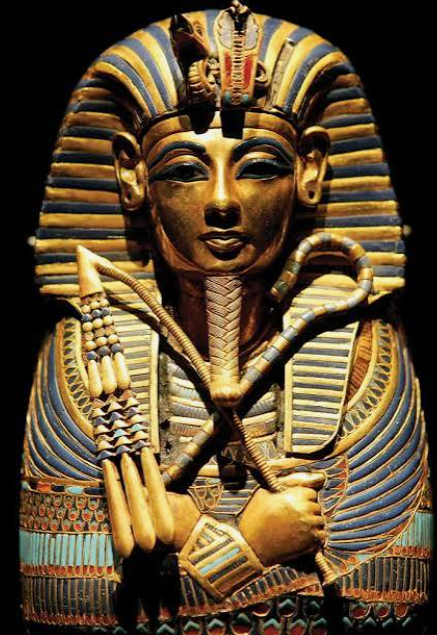
So how did the practice built around honoring the dead become one of horror’s most famous legends?
The answer came when the outside world became infatuated with ancient Egypt. During the nineteenth and early twentieth centuries, discoveries of ancient tombs and artifacts captured worldwide attention. Explorers uncovered forgotten temples, ancient writings and preserved bodies that had survived thousands of years. To many, Egypt seemed like a doorway into a lost world full of secrets.
However, the fascination soon developed into obsession. Ancient tombs were opened, treasures were removed and the remains of the dead became objects of curiosity. The mystery surrounding these discoveries created the perfect environment for stories of curses to spread.
The fascination with cursed tombs reached fever pitch in 1922 with the discovery of King Tutankhamun’s tomb by Howard Carter. When Lord Carnarvon, the expedition’s financial backer, died just months later from an infected mosquito bite, newspapers around the world eagerly linked his death to a supposed “Curse of the Pharoah.” As other members of the expedition died over the following years, often from ordinary circumstances, the legend only grew. While historians and scientists have largely dismissed the idea of a supernatural curse, the damage, or perhaps the magic had already been done. The public was captivated by the notion that disturbing the dead came at a terrible cost.
By the early 1930s, the world was already captivated by ancient Egypt, cursed tombs and the possibility that the dead might seek revenge. Hollywood simply did what it does best, turned those fears into unforgettable horror.
Hollywood Creates An Icon
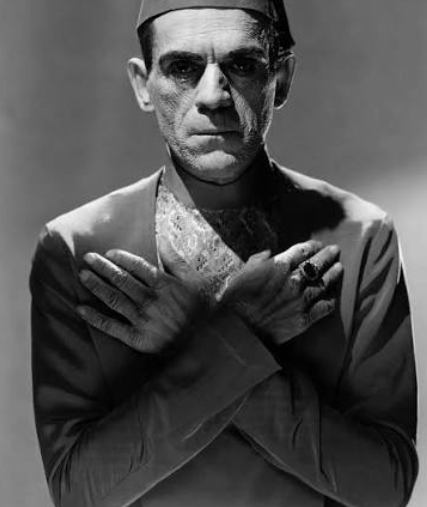
In 1932, Boris Karloff’s portrayal of Imhotep in The Mummy introduced audiences to an intelligent, tragic creature whose terror came not from mindless violence but from an ancient purpose that had survived the passage of time. His performance helped establish the mummy as one of Hollywood’s most enduring icons.
The monster continued to evolve in 1959 when Hammer Films released The Mummy, starring Christopher Lee. His version was larger, more physical and relentlessly driven by vengeance, reinforcing the image of an unstoppable, bandaged creature that became synonymous with the genre.
A new generation discovered the legend in 1999 with The Mummy, starring Brendan Frasier. Blending horror with action/adventure the film reinvented Imhotep as a powerful supernatural force while introducing the classic monster to those who may have never seen the original. In 2017, The Mummy offered another fresh take casting Sofia Boutella as Princess Ahmanet, proving the legend can evolve while still drawing on its themes of ancient curses and forbidden power.
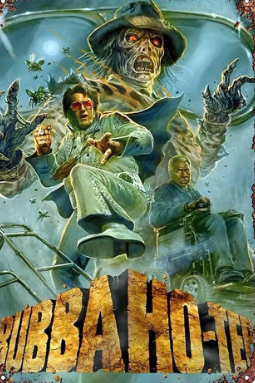
Not every adaptation has followed the traditional path. Bubba Ho-Tep (2002), starring Bruce Campbell, embraced dark comedy by placing a soul stealing Egyptian mummy in a Texas nursing home. There it faces off against an aging Elvis Presley and John F. Kennedy. As unconventional as it was, the film demonstrated just how adaptable the mummy had become.
Lee Cronin’s The Mummy (2026) brought the creature back toward its horror roots, trading adventure for a darker, more unsettling approach. By focusing on dread and body horror, the film reminded audiences that the mummy is at its most frightening when it feels like an ancient evil has entered the world.
Why The Mummy Still Scares Us
The reason the mummy remains one of horror’s editing monsters is because its fear is timeless. It represents the idea that the past is never truly gone. Beneath the earth, beneath the ruins and beneath layers of history something may still be waiting
The mummy also represents one of humanity’s oldest flaws – the belief that everything exists to be discovered and claimed. Horror has always warned us about the danger of arrogance and few creatures deliver that warning better than the mummy.

A vampire fears death yet thrives on it. A werewolf fears losing control. A zombie represents the unstoppable nature of mortality. The mummy represents the consequence of disturbing what should have remained untouched.
That is why the creature continues to endure. Whether it appears as a silent figure wrapped in linen or a powerful force from an ancient civilization, the mummy carries the same message it always has.
Some mysteries are meant to be uncovered.
Others are meant to remain buried.