
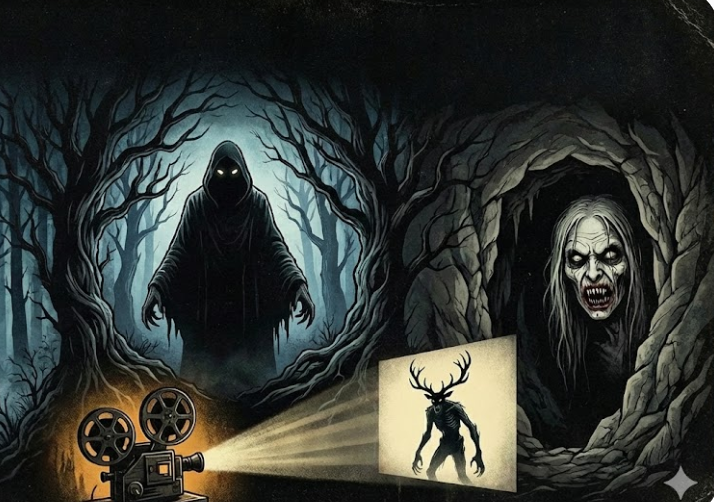
There are many ways to die in folklore, but none are as final as being eaten alive. Consumption is not just violence, it is erasure. To be devoured is to be unburied, unremembered, stripped of identity and transformed into fuel for something else. In myth this is never random. Being eaten is a verdict.
Long before horror films learned to linger on screaming mouths and tearing flesh, folklore understood that hunger is the most honest monster of all. Famine, winter and scarcity carved their fears into stories where survival required teeth and mercy was a luxury no one could afford. These were not monsters who killed for pleasure. They ate because the world had taught them to.
Modern horror did not invent this fear. It inherited it.
Consumption As Judgment
In folklore the creature is rarely chaotic. It punishes. It selects. The Wendigo does not hunt the strong, it waits for desperation. Baba Yaga does not invade villages, she targets the scared and lost. Being eaten alive is the price of crossing invisible lines – geographical, moral or social.

Contemporary horror preserves this logic. Films like The Hills Have Eyes and Wrong Turn revolve around trespassers who violate spaces they do not understand. The punishment is not execution but consumption. Bodies dismantled, absorbed and erased. The land itself becomes complicit. The forest judges. The desert decides.
We pretend that these stories are about mutants or inbred clans, but their structure is ancient. You entered the wrong place. You were not meant to survive.
The Wendigo – The Horror That Becomes You
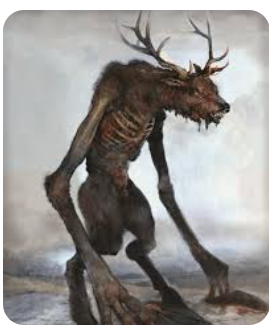
Few folkloric creatures embody consumption as completely as the Wendigo. Born from starvations and cannibalism, it is not a predator that arrives from elsewhere, but a transformation that happens inside of a person’s moral character and body. Once you consume human flesh to survive, survival becomes irrelevant. The hunger consumes you and it never ends.
Modern horror repeatedly returns to this idea. Ravenous presents cannibalism as both empowerment and damnation. It’s a seductive force that promises strength but hollows the soul. The Terror turns starvation into a slow spiritual rot, where men become monstrous long before they grow claws. Antlers literalizes the myth, revealing that the true horror is not being hunted but becoming the thing that hunts.
The Wendigo does not eat to live, it lives to eat. That is the curse.
The Child Eater – From Folklore To Found Footage
Folklore has always been honest about who is easiest to take. Children are small, trusting, loud and entirely dependent on the adults who are meant to protect them. In times of famine and plague, children were not only vulnerable but they were expendable. The child eater emerges from that truth.
Figures like Baba Yaga and Black Annis do not merely kill children, they consume them. Bones are sucked clean. Flesh is stripped away. Nothing is wasted. These monsters are not sadists, they are survival logic stripped of morality. When food is scarce, innocence becomes a liability.
Modern horror retains this fear but relocates it. Sinister drags the child eater out of the forest and into a suburban home. Bughuul is an ancient god dressed in modern imagery, replacing the witches’ oven with a camera and a fairy tale with found footage. The children are not dragged screaming into the night, they are groomed, guided and convinced to participate.

This is the oldest horror with a new face. The child is consumed long before the murder occurs. Identity erased. Empathy hollowed out and play transformed into ritualized slaughter. Like the child-eaters of folklore, Bughuul feeds on lineage, moving from family to family, leaving behind nothing but empty houses and corrupted memories.
Folklore warned that the forest was dangerous. Sinister makes a disturbing claim: the monster no longer needed the woods. It thrives in living rooms, bedrooms and hallways lined with family photos.
The Devouring Mother and Body Horror
Consumption in folklore often wears a maternal mask. Mothers who eat their young, witches who lure children with food or candy and wombs that become traps instead of sanctuaries. These stories reflect deep anxieties about reproduction, inheritance and the body’s capacity to betray itself.
Modern body horror continues this tradition. The Brood turns motherhood into biological vengeance. Alien reframes pregnancy as parasitic consumption. Raw explores hunger as a sexual and familial inheritance, passed down like a disease. In these stories, to be consumed is not an accident, it is destiny.
The body does not protect you. It participates.
Being Eaten Alive On Screen
Cinema lingers on consumption because it forces the audience to experience it. Films like Bone Tomahawk, Cannibal Holocaust and Green Inferno refuse to cut away, turning the camera into a ravenous mouth. The viewer becomes complicit, trapped in the act of watching bodies being dismantled piece by piece.
This is not exploitation for its own sake. It is folklore logic translated into visual language. To be eaten is not to disappear quietly. It is to be witnessed, remembered and internalized.
Why This Horror Endures
We like to believe that we have outgrown these stories, that famine and starvation belong in the past. But the hunger never vanished, it only evolved. Capitalism consumes people. War consumes bodies. Drugs consume lives. Families consume their own. Systems feed while individuals starve.
The monsters survived because they were never metaphors. They were warnings.
We stopped believing in monsters that ate us alive and started watching them on screen instead.