

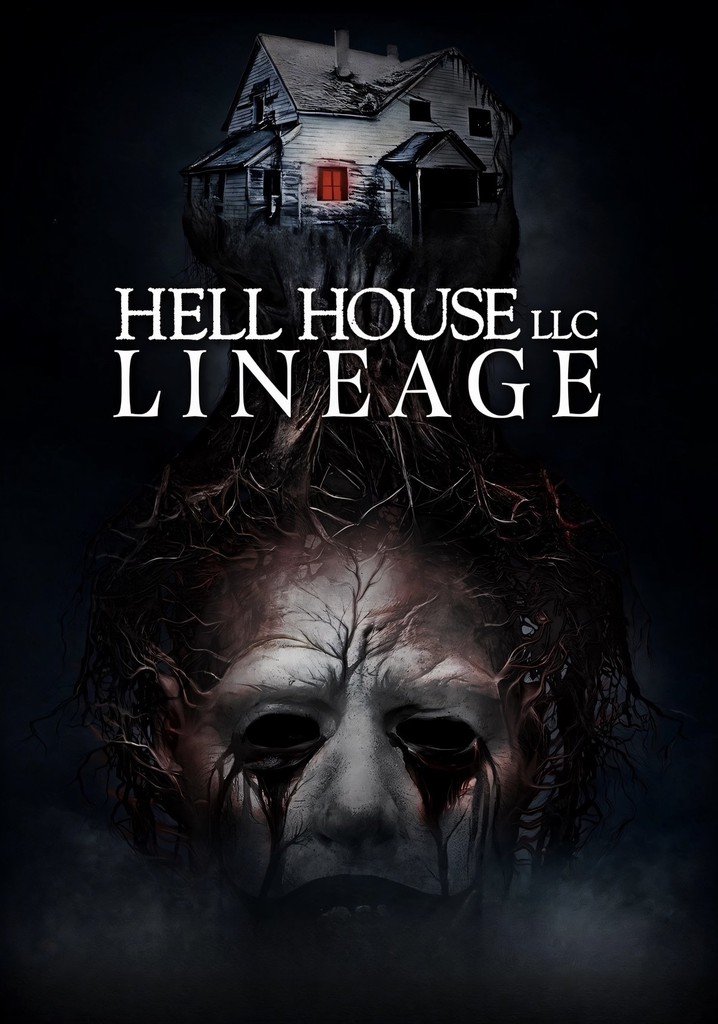
As both a fan of the Hell House LLC franchise and an indie filmmaker, I’ve always admired the way Stephen Cognetti and his team craft horror from shadows, silence, and lore. With Lineage, they’ve once again proven that horror can be more than jump scares — it can be world-building that lingers long after the credits roll.

Horror as a genre wears many faces. From the adrenaline rush of slasher films to the slow-burn unease of psychological tales, it has the rare ability to scare us in completely different ways. For me, one of the most effective approaches has always been the kind that builds a world — one steeped in history, atmosphere, and the subtle dread that seeps into your bones long after the credits roll. Hell House LLC: Lineage, the latest entry in Stephen Cognetti’s acclaimed series, is a prime example of that style done right.
From its debut, the Hell House LLC franchise has never relied on spectacle or excess. Instead, it crafts its horror from the tension of place — from the way a shadow clings to the corner of a hallway, or how a room feels just slightly wrong even in broad daylight. With Lineage, Cognetti returns alongside longtime collaborators Joe Bandelli and Joe Dain of Terror Films to further enrich that unsettling universe. The result is a film that feels not just like a continuation, but an expansion of the mythos.
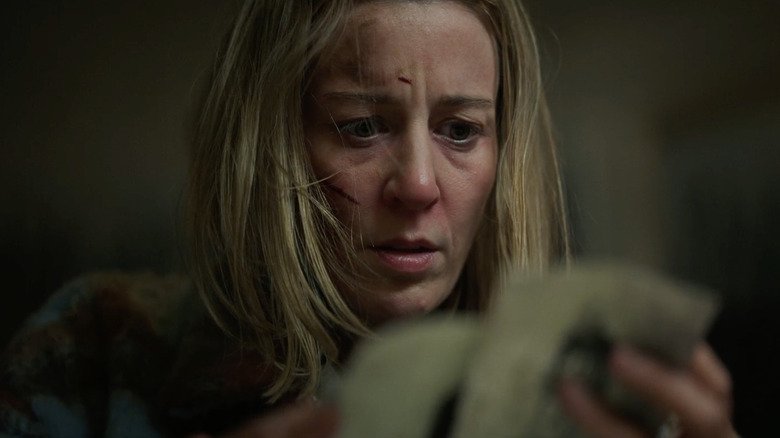
One of the most striking elements here is the attention to setting. The spaces in Lineage don’t just serve as backdrops; they feel inhabited, layered with stories and memories we can only glimpse. That sense of place is one of the series’ most enduring strengths, and it’s alive and well here. Without spoiling a thing, I can say that the world feels bigger, yet still claustrophobic in the best possible way — an accomplishment in itself.
The storytelling is equally thoughtful. Found-footage horror, when done well, demands a careful balance of pacing and authenticity. Cognetti and his team understand that the genre’s greatest scares often come not from frantic jump cuts, but from letting moments breathe. In Lineage, tension is allowed to simmer. Scenes hold just long enough for the audience’s imagination to start doing the work — and that, to me, is one of horror’s most powerful tools.
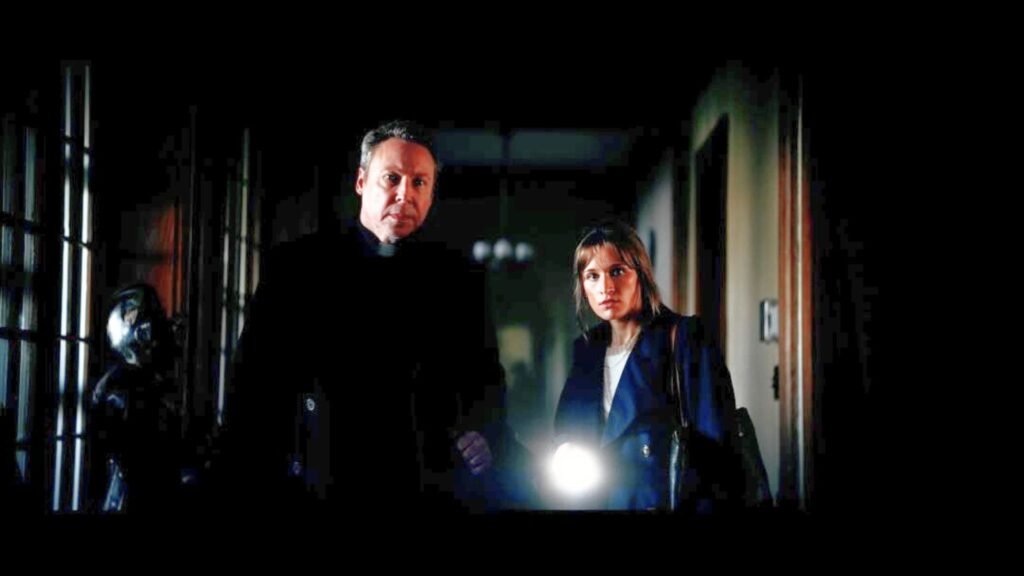
It’s also a film that respects its own lore. Fans who have followed the series will recognize the threads that tie this chapter to what came before. The script walks that fine line between rewarding long-time viewers and welcoming new ones, which is no small feat. You can feel the care that went into weaving those connections — not just for continuity’s sake, but to deepen the experience. This prompts even the most seasoned HH LLC fan to go back and look – and find – clues from prior films in the series.
What stands out most, though, is the heart behind the project. As an independent filmmaker myself, I know the countless unseen hours that go into bringing a vision like this to life. The collaboration between Cognetti, Bandelli, and Dain shows in the details — in the way the narrative unfolds, in the commitment to the franchise’s tone, and in the respect for its audience. You can sense the trust they have in the story they’re telling, and that trust invites us, as viewers, to lean in.
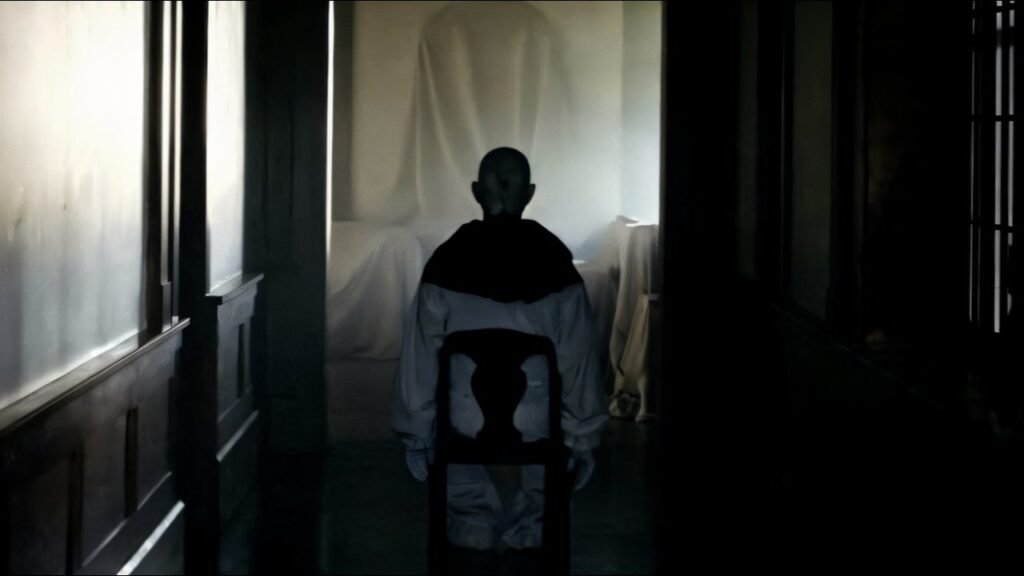
Hell House LLC: Lineage is not the kind of film that chases the easy scare. It doesn’t rely on relentless gore or mindless violence. Instead, it’s a carefully built experience — a reminder that horror can still be about craft, patience, and atmosphere. In a landscape where louder often tries to pass for scarier, that’s worth celebrating.
Whether you’re a long-time fan of the Abaddon Hotel’s mysteries or stepping into its halls for the first time, Lineage offers a journey worth taking. It’s proof that there’s still room in horror for films that value story over spectacle, and that in the hands of passionate creators, even the darkest places can be lit by the spark of imagination.