
By Kadrolsha Ona Carole
The Aesthetic of Fear: Unmasking the Beauty in Horror Films
In the realm of cinema, horror is often cloaked in darkness, dread, and discomfort—but beneath that veil lies a strange and compelling beauty. From the haunting elegance of gothic mansions to the surreal symmetry of nightmare sequences, horror films have long used visual and emotional beauty to deepen the impact of fear.
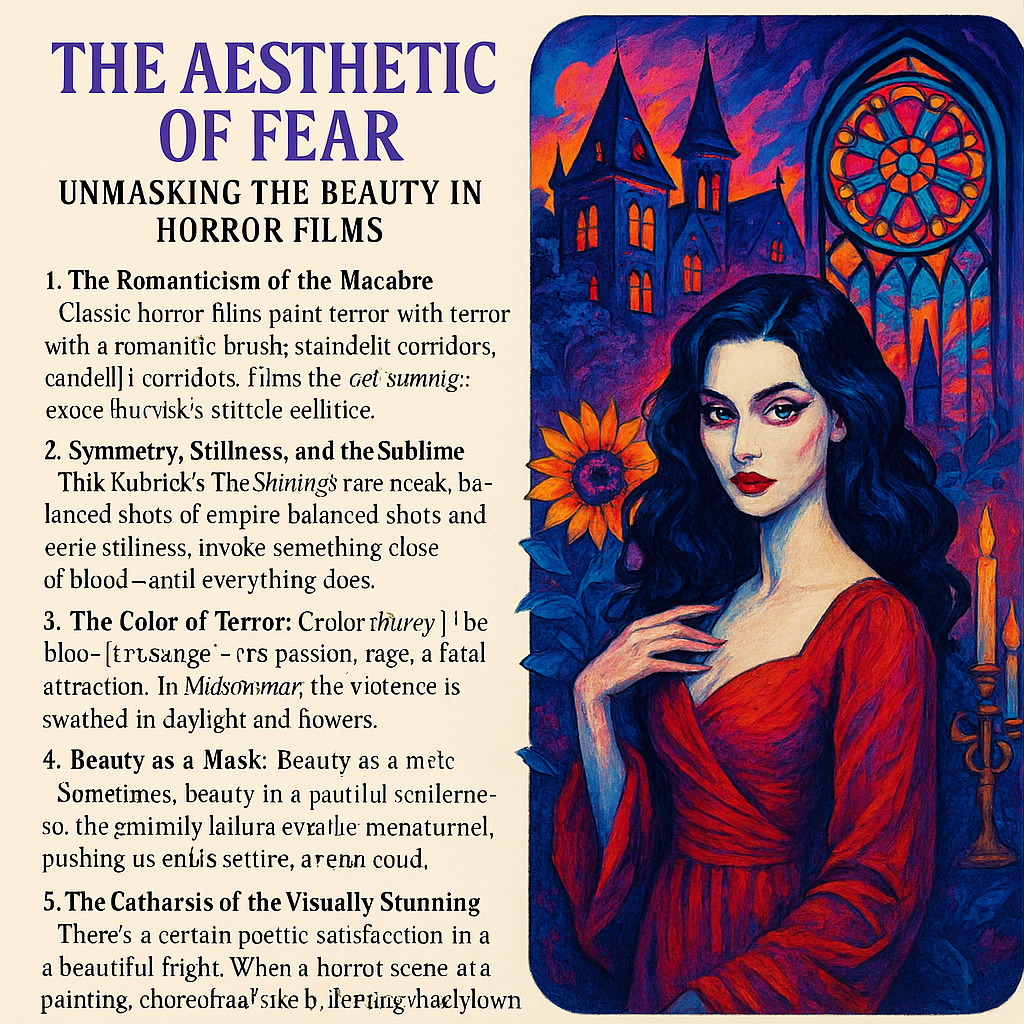
1. The Romanticism of the Macabre Classic horror films like Dracula or Crimson Peak paint terror with a romantic brush—stained glass windows, flowing gowns, candlelit corridors. These elements aren’t just for atmosphere; they seduce the viewer, creating a visual lull that makes moments of horror even more jarring. This contrast between aesthetic beauty and grotesque horror heightens emotional responses by blurring the line between allure and dread.
2. Symmetry, Stillness, and the Sublime Think Kubrick’s The Shining: those perfectly balanced shots of empty hallways and eerie stillness invoke something close to reverence. The use of symmetry creates a calm so precise it becomes unnatural, pushing the viewer toward unease without a single drop of blood. Horror filmmakers often use composition like a sculptor uses stone—carving tension into every frame.
3. The Color of Terror Color theory plays a subtle but powerful role. Crimson isn’t just blood—it’s passion, rage, and fatal attraction. Monochrome palettes evoke dreamlike unreality. Muted tones suggest psychological decay. In Midsommar, the violence is swathed in daylight and flowers, a visual contradiction that feels more disturbing than darkness ever could.
4. Beauty as a Mask Sometimes, beauty in horror is the lie itself. The pristine town hiding ancient evil. The smiling face that conceals malevolence. Films like Get Out and Hereditary expertly wield aesthetic calm to lull both characters and viewers into believing nothing could go wrong—until everything does.
5. The Catharsis of the Visually Stunning There’s a certain poetic satisfaction in a beautiful fright. When a horror scene is lit like a painting, choreographed like a ballet, or scored like an opera, it elevates the emotional resonance. We’re not just scared—we’re captivated. That’s the power of beauty in horror: it tricks us into letting our guard down, and then delivers a shiver straight to the soul.
Visit KO: https://www.queenoftheparanormal.com