

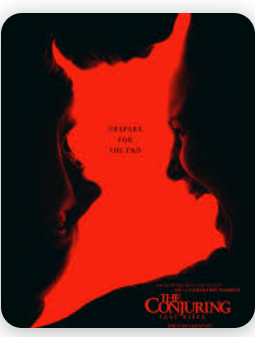
The Haunting That Refused To Let Go
By the mid 1980s, Ed and Lorraine Warren were no strangers to darkness. They had battled infestations, possessions and skeptics with equal ferocity. But the case that inspired The Conjuring: Last Rites (2025) was different. It wasn’t a single outburst or a dramatic confrontation. It was something slower, patient, heavier. It was a haunting that clung to a family for more than a decade and refused to let go.
This was the Smurl case. It was a haunting so persistent that even the Warrens, hardened veterans of the supernatural, found themselves drawn into a battle that tested every corner of their faith.
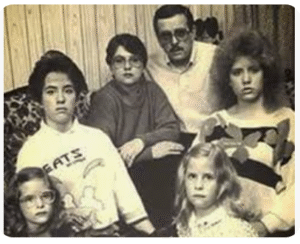
The Smurl Family
Jack and Janet Smurl moved into a duplex on Chase Street in Pittstown, Pennsylvania, in 1973. Their home shared a wall with Jack’s parents, an arrangement meant to give both families support and stability. Instead it became the stage for years of fear.
For a long time the disturbances were mild: footsteps, voices, a shadow slipping by a doorway. Things went missing, appliances broke down. The classic signs of a haunting, almost too classic. The Smurls tried to ignore it, chalking it up to bad luck or faulty wiring.
Then the violence began. Scratch marks appeared in the walls and on skin. Their dog was lifted and hurled across the room. Jack reported being assaulted by something he could not see. Janet could hear her name being chanted and unexplained cold breezes blew through the home. The house would fill with the scent of rotting flesh that appeared and vanished with no explanation.
By 1985, after years of abuse, the Smurls reached out to the Warrens.
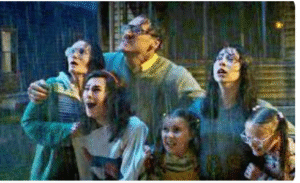
Enter The Warrens
Ed and Lorraine arrived with a small team of investigators, according to their reports,one of the entities inside the house was not just a spirit, it was inhuman. Lorraine claimed to see a hooded, faceless form standing behind Jack that radiated hate.
The Warrens said that the house contained several spirits. A depressed woman. An angry old man. A shadowy trickster and one thing far worse than the rest. Something Ed described as only “The Devils.” The church became involved and several exorcisms were attempted. The haunting calmed but would return with a greater force. It was as if the house resented every attempt to drive the evil out.
And through it all the Smurls remained trapped. They couldn’t afford to leave.
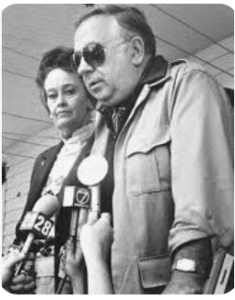
Skeptics and A Lingering Legacy
From the moment the “Last Rites” case entered the public eye, it became a flashpoint in the long standing debate over Ed and Lorraine Warren. Critics argued that the Warrens had inserted themselves into a household already teetering from stress, illness and superstition. Paranormal debunkers pointed to contradictions in eyewitness testimony, timeline gaps and the Warren’s tendency to document things that dramatically favored their narrative.
Years later, the case remains a point of fascination, controversy and quiet dread. Some believe the Warrens prevented something catastrophic, others argue their presence only inflamed an already volatile situation. But regardless of belief, the story refuses to die. It resurfaces in documentaries, paranormal forums and now as a film. It’s a reminder that the Warrens left behind more than just interviews and files, they left behind a mythology. Dense Contested and stirring in the dust of old houses where the lights flicker for no reason at all.
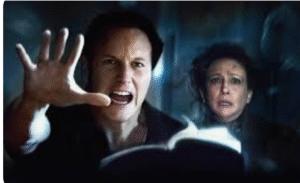
Final Reflections: The Warren’s Shadow Over Cinema and Reality
Looking back across the Perron farmhouse, the Enfield haunting, the murder trial of Arne Johnson and the final crucible depicted in The Conjuring: Last Rites, a single truth rises from the mountains of testimony: folklore and faith. The Warrens operated in a space where belief and fear walked hand in hand. Each haunting left behind a tangle of conflicting memories. Victims who swore the Warrens saved them and skeptics who insisted the couple manipulated and misread results. Yet each story held just enough darkness, just enough unanswered questions to linger long after the lights are turned back on.
The films took these stories and distilled them into modern myth, transforming Ed and Lorraine Warren into icons. Flawed. Passionate and unshakeably certain of their calling. The real cases are messier, more human but the tension between faith and doubt remains the beating heart in both versions. Whether the Warrens truly uncovered supernatural evil or simply reflected the anxieties of the people who sought them out. The Conjuring universe thrives because these stories still whisper to us. The past is never entirely quiet, that fear is a universal language and that some haunting, real or imagined, refuse to stay buried.