
Ireland’s misty hills, jagged coastlines, and dense forests have long been the setting for stories that both chill the bones and ignite the imagination. The Irish are known for their rich folklore, which weaves together the supernatural and the eerie with an ever-present awareness of mortality. At the heart of this folklore is the Dullahan, a terrifying, headless rider who roams the Irish countryside seeking souls to claim. But this is far from the only creature lurking in the shadows. From wailing banshees to shape-shifting fairies, the Gaelic legends are brimming with dark stories that have captivated audiences for centuries.
The Headless Horseman of Irish Legend: The Dullahan
When we think of a headless horseman, we often picture the famous tale of The Legend of Sleepy Hollow. But in Irish folklore, the Dullahan stands as a far more sinister figure. This grim rider is not merely a ghost but a force of nature, embodying death itself.
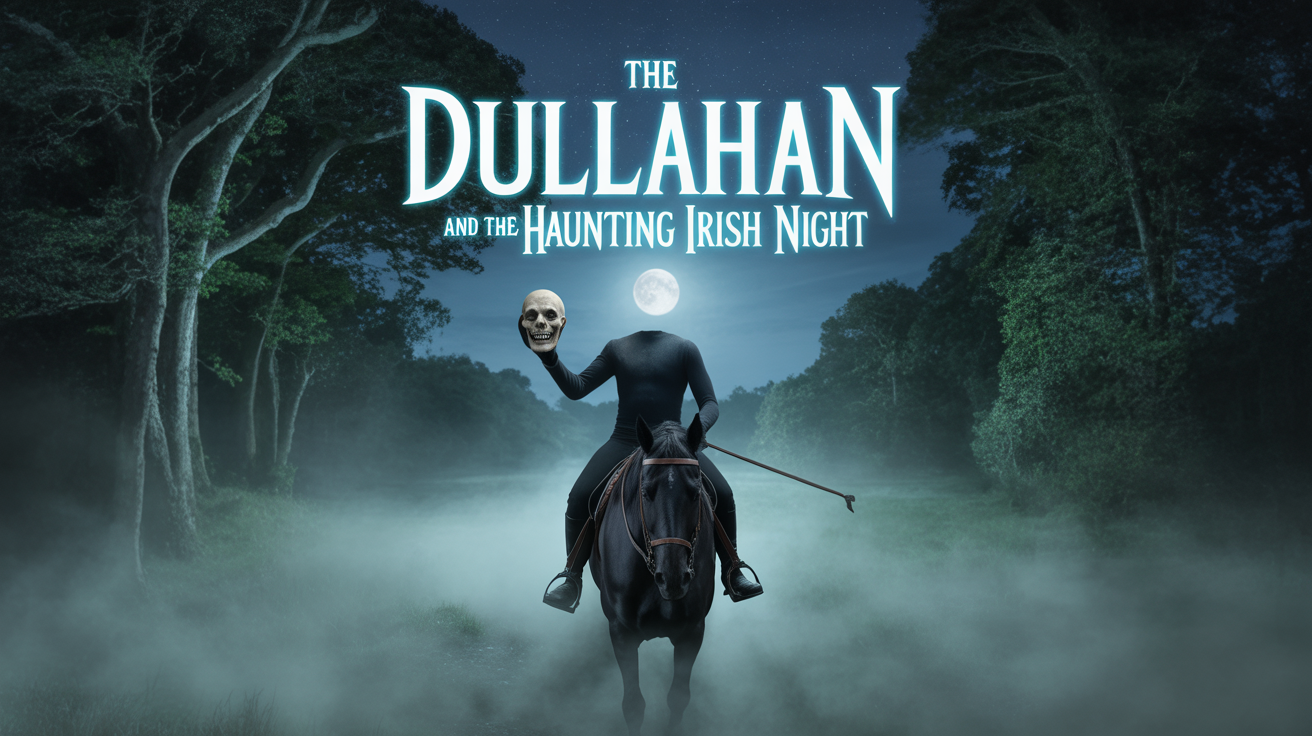
The Dullahan is typically depicted as a tall, spectral figure, holding its decapitated head under one arm. The head, gruesome and grinning, often gazes with wild eyes that glow like embers. The headless rider’s horse, black as night, gallops with unsettling speed. The Dullahan’s arrival is always marked by a chilling sound — the thunderous clatter of hooves, growing louder and louder until it’s almost unbearable. Some say the sound is unnatural, unlike any normal horse’s galloping. The sound of its hooves on the ground seems to echo with the finality of death, reverberating in the air long after the rider has passed.
The Dullahan’s Mission…
Unlike other headless legends, the Dullahan’s mission is more than just wandering. It has a singular purpose: to claim the souls of the dying. Once it arrives at a house, it calls out the name of the person about to die. As soon as the Dullahan speaks their name, that person is struck dead. No struggle. No fight. The soul is taken, and the body drops lifeless. The Dullahan, unfeeling and merciless, moves on to its next victim.
One of the most unsettling aspects of the Dullahan’s legend is its curse. If you look directly at the headless rider, it’s said that you will suffer a terrible fate. Some say you’ll be struck blind, while others claim that you will die in the same manner as its victims — cold and lifeless, just like the souls it claims. But if you can avoid making eye contact, the Dullahan may not notice you, and it will continue its ride without incident. The only defense against this terrifying being is to lock the doors and windows before it arrives. But no one truly knows how to stop it once it’s set its sights on a soul.
The Significance of the Dullahan in Irish Culture
The Dullahan’s origins lie in Ireland’s ancient mythology, specifically in stories about the Fomorians. These mythical beings, often portrayed as monstrous or dark, are tied to the forces of chaos and destruction. The Dullahan, a being that steals souls and brings death, fits perfectly into this tradition of dark beings tied to mortality.
For the Irish, death is not just an end — it’s a journey. The Dullahan represents the idea that death is not something to be feared, but something inevitable. In ancient Irish tradition, the belief in the afterlife was strong, and many saw death as a passage to another world. But the Dullahan also serves as a reminder that no one escapes death. It’s not something that can be outrun, avoided, or cheated. The Dullahan will find you when your time comes.
Other Terrifying Gaelic Legends
While the Dullahan is perhaps the most famous of Irish horror creatures, it’s not the only terrifying being in the Gaelic folklore. Ireland is home to a whole host of supernatural beings, each more disturbing than the last.
The Banshee
The Banshee is another of Ireland’s most famous spirits. Her mournful wail is said to signal the death of someone in the family. The Banshee is often depicted as a woman with long, flowing hair and pale, sorrowful eyes. Her voice is haunting, filling the air with a chilling, wailing cry. This cry can be heard at night, usually near the home of the person who is about to die.
The Banshee’s presence is both sorrowful and terrifying. She does not kill or harm anyone herself, but her wail is a forewarning of death. If you hear her, you know that the end is near. The Banshee is a figure tied to mourning and loss, a ghostly presence that reminds the living of the fragile nature of life.
The Leanan Sidhe
The Leanan Sidhe is a fairy, but not a kind or gentle one. She is beautiful, alluring, and dangerous. The Leanan Sidhe lures mortal men into her grasp, enticing them with her beauty. But once they fall in love with her, their vitality begins to drain away. She feeds off their life force, growing stronger while they grow weaker.
Eventually, the man dies, his life force consumed by the Leanan Sidhe. The Leanan Sidhe’s story is a cautionary tale about the dangers of obsessive love and the destructive power of desire. It also speaks to the Irish belief in the power of fairies, who were often seen as both helpful and malevolent, depending on their mood.
The Púca
The Púca is a mischievous creature that can take on many different forms. It might appear as a black horse, a goat, or even a human figure. The Púca is known for playing tricks on travelers, leading them astray on lonely roads or in dark forests. It can be both terrifying and playful, never quite predictable in its actions.
Some say that the Púca can bring bad luck to those it encounters, while others believe it has the power to curse them. It is a creature of the night, always watching, always waiting to cause trouble. Its shape-shifting nature makes it especially frightening. You never know what it might look like when it appears — and that’s what makes it so dangerous.
Real-Life Sightings and Impact on Irish Folklore
The Dullahan’s terrifying legacy isn’t confined to myth alone. Throughout Irish history, there have been reports of sightings and encounters with this headless rider. Some people claim to have heard the sound of hooves late at night, echoing through the misty countryside. But when they looked outside, there was nothing to be seen. Others tell of an overwhelming sense of dread, a presence that seemed to follow them as they traveled along lonely roads.
These tales of the Dullahan’s sightings have persisted through generations, becoming an integral part of Irish folklore. Whether these encounters were real or simply the result of superstition, they continue to contribute to the myth of the Dullahan, reinforcing its power as a symbol of death.
The Dullahan in Modern Culture
The Dullahan’s legacy extends far beyond Ireland. It has inspired numerous horror films, books, and television shows. One of the most notable influences is Washington Irving’s The Legend of Sleepy Hollow, where the headless horseman is a central figure. This story has inspired countless adaptations, each one drawing from the same eerie image of a rider without a head, pursuing death.
In television, the Dullahan appears in shows like Supernatural, where it is used as a symbol of the unstoppable force of death. The creature’s ominous presence continues to haunt modern horror, its chilling image forever embedded in the genre.
Lessons from the Dullahan and Irish Horror
The Dullahan is more than just a frightening figure. It embodies a deep truth about life and death — that death is inevitable, and it comes for us all. The Dullahan, with its headless form and relentless pursuit, serves as a reminder that we cannot escape our fate.
The story of the Dullahan, and other Irish horror legends, also teaches us something about the power of myth. These stories aren’t just to frighten us — they’re to remind us of the things we can’t control. The Dullahan might be a ghost story, but it’s also a way for the Irish to confront their fears about death, fate, and the supernatural. In a way, these legends offer a form of comfort, showing us that death, while terrifying, is something everyone must face.
So, next time you hear the distant sound of hooves echoing through the night, remember: it might just be the Dullahan riding to claim another soul.