


The Hunter Becomes The Horror
“Some monsters scream when they kill. Others smile.”
As the 1980s gave way to the 90s, the golden age of serial killers began to flicker. Gone were the days when murderers like Bundy, Gacy and Ramirez, could blend in with suburbia and rack up body counts. DNA technology was improving. Victims were finally being believed. Yet, the darkness hadn’t lifted, it just changed shape.
Two killers would emerge in the twilight of the century. One a woman who shot back at the world that had brutalized her, then claimed she had no choice but to kill. The other, a mild mannered baker and family man who flew his victims into the cold silence of the Alaskan wilderness, where no one could hear them scream.
Aileen Wuornos and Robert Hansen had one thing in common: nobody saw them coming. One was loud, broken and explosive. The other, quiet, calculating and nearly invisible. Both left behind a trail of bodies that nobody expected.

Aileen Wuornos: The Woman Who Fought Back
A Childhood Of Violence
Aileen was born in 1956 in Rochester, Michigan. Her father was a convicted child molester who hanged himself in prison before Aileen turned one. Her mother abandoned her by age four, leaving Aileen and her brother in the care of their grandparents.
By the age of eleven, she was trading sex for cigarettes and money. She had a child at the age of 14, speculations were that the child was fathered by either her grandfather or one of his friends. The child was given up for adoption. Her family kicked her out at the age of 15, where she began living in the woods, at friend’s homes or the street. She hitchhiked around Michigan under assumed names, prostituting to survive. After her brother lost his battle with esophageal cancer, Aileen inherited a small amount of money. She finally left Michigan using the money to make her way south.
By the early 1980s, Wuronos moved to Florida to work as a prostitute. She accumulated a record for arrests for various crimes, including burglary, disorderly conduct, assault, drunk driving, armed robbery and of course, prostitution. She served 13 months in prison for an armed robbery, undeniably her life was fraught with hardship and instability, leaving a lasting impression on her life to come.
The Killing Begins
Aileen Wuornos’ killing spree began November 30, 1989, when she was picked up by Richard Mallory, a 51 year old electronics store owner. According to Aileen, Mallory raped her at gunpoint. She claimed she shot him in self defense but the scene told a more complicated story. Mallory’s body was found partially clothed in a wooded area riddled with four bullets from a .22 caliber pistol. His car and valuables were missing.
Over the next eleven months, six other men were murdered under nearly identical circumstances. Each victim had vanished from Florida highways, shot several times with the same .22 caliber gun and dumped in rural locations. Some were found nude, others partially clothed. Some were robbed. Others mutilated. All were brutalized. The pattern was consistent but the motive was unknown to authorities.
Wuornos claimed that each man tried to rape her. Prosecutors argued that she was a thrill killer that robbed her victims, and presented a pattern. A signature. The defense debated that she killed to survive, and the public was torn. Was she a vengeful victim or cold blooded predator with a tragic backstory?
Betrayal and Breakdown
Aileen’s only emotional anchor during her killing spree was her girlfriend, Tyra Moore. They lived off of stolen goods and sex work, bouncing between dingy hotel rooms in central Florida. Wuornos murdered. Moore kept quiet. But everything unraveled after a fatal mistake.
On July 4, 1990, Aileen and Tyra crashed a victim’s car, that of Peter Siems. He was a 65 year old missionary whose body was never found. Witnesses saw two women flee the scene. Police recovered the abandoned car and lifted a partial palm print from the interior. That print would later be matched to Wuornos.
With media pressure mounting and a clearer suspect emerging, the police began circulating composite sketches of both Aileen and Tyra. Moore grew increasingly fearful and left Aileen and returned to Pennsylvania.
By January 1991, detectives located Wuornos, who was staying at a biker bar called The Last Resort. Undercover agents, posing as bikers were also “arrested” during the raid that brought Aileen in, needed her to talk. They required a confession. They turned to Moore.
Offered immunity, Moore agreed to cooperate. She was placed in a safe hotel room and made a series of recorded phone calls to Wuornos, urging her to confess. Aileen, convinced that the woman that she loved was going to be arrested, finally gave in.

“I did it. I did it all. You’ll be OK Ty. I love you.”
That confession sealed her fate. Wuornos was arrested January 9, 1991. In custody she gave conflicting interviews. Sometimes she justified the murders as self defense, other times showing no remorse at all. Her behavior in court became erratic. Diagnosed with borderline personality disorder and PTSD, she screamed at jurors and cursed at reporters. None of it saved her, she was sentenced to death in 1992.
Execution and Legacy
Aileen spent more than a decade on death row in Florida. During that time, her mental state deteriorated dramatically. She gave rambling interviews, claimed she was being poisoned by prison staff and said the FBI was in a conspiracy to torture her and driver her insane. At one point she described herself as a “professional killer working for God.” She often spoke of herself in the third person, referring to herself as “The Divine Avenger,” sent by the Almighty to punish evil men.
In a bizarre twist, during her years on death row, Aileen was legally adopted by a born again Christian woman named Arlene Pralle. Pralle had seen Aileen’s picture in the newspaper and felt that she had been “called by God” to reach out to the convicted killer. Their relationship grew quickly, and in 1992, Pralle officially became her adopted mother. Some saw it as exploitation, others as genuine compassion. Aileen, for her part, seemed comforted by the arrangement, though her psychological state continued to decline.
She would flip between wanting to live and wanting to die. Eventually, in 2002, she dropped all appeals and requested that her sentence be carried out as soon as possible. She told the court that she was ready to die but her attorneys argued that she was mentally unfit. She was ruled competent to choose execution.
On October 9, 2002, Aileen Wuornos was executed by lethal injection at Florida State Prison. Her final words were unnerving and surreal. “I’m sailing with the Rock and I’ll be back like Independence Day, with Jesus, June 6th. Just like the movie, big mothership and all.”
She became the first woman to be executed in Florida in over a century. Her legacy is tangled in contradiction. To some, she remains a figure of female rage, a woman brutalized from birth who struck back against a predatory world. To others, she was a dangerous, unstable killer driven not by trauma but by greed and hate.
But no one denies this: Aileen Wuornos changed the face of crime in America. She didn’t hide in the shadows. She walked the highways with a gun, a grim history and a death toll that made the country question who or what a serial killer could be.
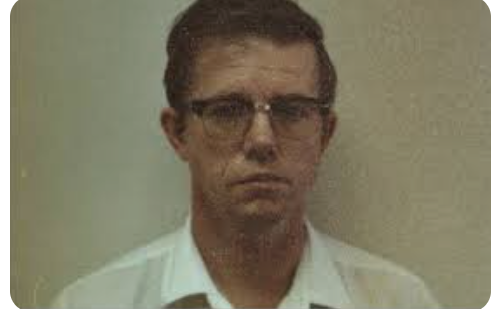
Robert Hansen: The Butcher Baker of Anchorage
The Quiet Monster
By all appearances, Robert Hansen was just another hardworking Alaskan. A soft spoken baker who ran a successful shop in Anchorage. He was a husband, a father and a respected member of the community. But behind the dough and icing, Hansen was nursing dark, violent urges that had been festering for decades.
Born in 1939 in Estherville, Iowa, Hansen’s early life was filled with emotional neglect and strict discipline. He was painfully shy, plagued with severe acne that left his skin pock marked and scarred. He also spoke with a pronounced stutter which made him a target for bullying and abuse. His relationships with women were filled with rejection and resentment. As a teenager he developed a quiet hatred for the girls who rejected him and the boys who seemed to win at everything effortlessly.
In 1960, he was arrested for burning down a school bus garage. It was a petty act of revenge but it revealed something deeper in his psyche. Hansen enjoyed the power he wielded when causing destruction. He spent time in prison trying to keep his urges hidden and buried to blend back into society. These suppressed feelings of extreme violence would explode in the remote Alaskan wilderness.
The Hunt Begins
After moving to Anchorage, Alaska, in the late 1960s, Robert Hansen seemed to settle into a normal life. He opened a bakery, raised two children and even broke several local hunting records. But underneath the wholesome exterior, Hansen had discovered a terrifying playground: the Alaskan wilderness.
Between 1971 and 1983, Hansen led a secret life of abduction, torture, rape and murder. He would cruise the seedier parts of Anchorage, picking up sex workers and dancers. Once he had them in his grasp he took them to a secluded airstrip. There, he would handcuff them, beat them and abduct them. It was perfect to get his victims alone, isolated and hopeless. From there, the nightmare escalated.
He would fly his victims deep into the Alaskan backcountry in his small bush plane, often to remote places near the Knik River. There, he would strip them, torture them and rape them. He would tell them to “run.” He then gave them a head start before hunting them down like wild animals. He was armed with a .223 caliber rifle, a powerful weapon used in target practice and hunting, and a large hunting knife with a blade six inches long.
Those who tried to run never stood a chance. They were barefoot, oftentimes nude, disoriented and terrified. He knew the terrain, he was an avid hunter and an expert marksman. The man Anchorage knew as a baker, was in truth, a sadistic, methodical serial predator who turned the endless forest into his own killing ground.

Map Of The Missing
In 1982, everything began to unravel for Robert Hansen. His carefully hidden world came crashing down thanks to a teenage girl who refused to become a victim.
Seventeen year old Cindy Paulson escaped from Hansen after being kidnapped and raped. Still handcuffed and barefoot, she ran down a busy street, flagged down a truck driver and later led police to a small airplane hangar where Hansen had planned to fly her out.
At first the police hesitated. Hansen was well liked in the community, known for his bakery and his quiet demeanor. But Paulson’s story never wavered. Detectives dug deeper. When a search warrant was issued, the truth was exposed. Hidden in Hansen’s attic was the .223-caliber rifle, jewelry belonging to missing women and a map marked with over a dozen Xs. Each represented a body dumped in the Alaskan wilderness.
With the help of the FBI and forensic teams, police began excavating sites across the remote landscape. One by one, skeletal remains and decomposing remains of women were uncovered. Some were unidentified and tagged as “Jane Doe”, others were the remains of missing women from Anchorage’s red light district. Hansen’s map would become known as “The Hunters Guide To Death.”
He eventually confessed to killing 17 women, though authorities believe the number is over 20. His preferred victims were prostitutes, dancers, drug addicts, women that society wouldn’t miss. They could vanish into thin air and nobody would care, he depended on that anonymity. He hunted for the ones that seemed a little lost, sad or addicted, easy manipulated, easy prey. Some crime historians believe that his number is closer to 50.
Anchorage, Alaska had unknowingly harbored one of the most sadistic killers in American history. A man who baked pastries and smiled at customers during the day and by night buried women in shallow graves.
Conviction, Silence and Death
In the face of overwhelming evidence, Hansen confessed. His voice remained flat and emotionless as he described abducting women, flying them to the wilderness and hunting them down like prey. It was a confession without remorse. Matter of fact. Cold. Methodical and horrifying in detail.
Hansen was convicted in 1984 of four murders, though he confessed to many more. He received 461 years along with a life sentence with no possibility of parole. The courtroom didn’t see a madman. They saw a calculating predator who lived a double life for over a decade without raising suspicion.
He was imprisoned at Spring Creek Correctional Center in Seward, Alaska. He remained largely silent for the rest of his life. Unlike other notorious killers, he did not want the spotlight. He granted few interviews and when asked why he was so quiet he coldly stated that those memories are his and only his. He simply vanished into the prison system.
On August 21, 2014, Robert Hansen died at the age of 75 by natural causes in his cell. He took many secrets to the grave – names, dates, grave sites, final moments lost in the Alaskan cold. He left behind a legacy of not only murder, but of terror. A reminder that some monsters don’t wear masks, they smile and bake your bread. They shake your hand or wave from across the street.
Next (and final) Article: The Quiet Ones Who Watched
In our final chapter, we’ll turn to two men who stalked from the shadows for decades. Dennis Rader, the BTK killer and Joseph James DeAngelo, the Golden State Killer. Both hid in plain sight. Wore masks of normalcy and evaded capture for years by living alongside the very people they were hunting.
We’ll also take a moment to acknowledge those who we didn’t cover in length. Names like Jeffrey Dahmer, Edmund Kemper, Gary Ridgway and Andrei Chikatilo. Killers who shaped the public’s understanding of evil, both in America and across the globe.
Because while this series may be ending, the twisted legacy of the 20th century’s most demented minds lives on. In headlines. In breaking news. In nightmares and in the quiet places nobody bothers to look.