


The scream in the shower never really ended
It echoes. Sharp and metallic, it is impossible to forget, from the moment Marion Crane pulls back the curtain in Psycho(1960). The knife rises and falls, but the true violence isn’t the blade. It’s in the perspective. The way the camera traps you in that bathroom, too close to step away, too drawn in to pretend you aren’t watching. Hitchcock doesn’t simply show you horror, he implicates you in it. He turns voyeurism back onto the voyeur.
It is where modern psychological horror begins. Not with monsters but with the realization that the audience itself is part of the mechanism.
Decades later, that mechanism evolved into something colder, more precise. In the hands of David Fincher, horror is no longer a moment of intrusion. It is a process. A slow, methodical dissection of the human mind, where fear doesn’t strike. It settles in and refuses to leave.
The Architect Of Fear – Hitchcock’s Control
Hitchcock’s genius lies in control. Every frame is deliberate. Every movement is calculated to guide the viewer into a position of helpless awareness. In Rear Window (1954), a man confined to his apartment watches the lives of others unfold through glass and distance. At first, it feels harmless, even relatable. Curiosity is easy. Observation is passive. But Hitchcock tightens the lens, narrows the world, until the act of watching becomes invasive. Suspicion creeps in. The audience begins to search for meaning in every shadow, every half seen gesture. By the time something is truly wrong, it is too late to look away. The viewer has already crossed the line.

This is the quiet cruelty of Hitchcock’s design. He does not force horror onto you. He lets you walk into it willingly.
In Vertigo (1958), that cruelty turns inward. Obsession replaces curiosity, and identity becomes something fragile. Something that can be reshaped and rewritten. The horror is not sudden. It is gradual, suffocating. Built from longing and control until it collapses under its own weight. Hitchcock understands that the most terrifying transformations are the ones we justify to ourselves.
And then there’s Psycho, where control is stripped away entirely. The narrative fractures without warning. Safety dissolves. The film abandons its own structure as easily as it abandons the protagonist, leaving the audience disoriented and exposed.
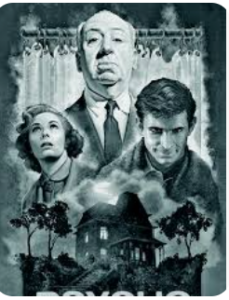
Hitchcock’s horror is intimate. It sits beside you, watching as you watch.
The Clinical Eye – Fincher’s Obsession
Fincher takes that intimacy and removes its warmth. Where Hitchcock’s gaze is intrusive, Fincher’s is clinical. Detached. Unforgiving.
In Se7en (1995), violence is not chaotic or impulsive. It is constructed with purpose, each act following part of a larger decision that unfolds with grim inevitability. The world itself feels decayed, suffocated by rain and shadow, as though the environment is complicit in what is happening. Fincher does not simply ask the audience to watch. He forces them to consider them, to understand the logic behind them, however disturbing that logic may be. The horror emerges not from what is done, but from the realization that it follows a pattern that can be recognized.
Understanding becomes a form of participation.

This idea deepens in Zodiac (2007), where the absence of resolution becomes its own kind of terror. The killer is not a presence to be defeated but a void that consumes attention and refuses to be filled. The characters are drawn into it, piece by piece, their lives narrowing around a question that will never be answered. The audience is pulled along with them, searching for meaning in fragments, convinced clarity must exist somewhere just out of reach.
But it never comes.
Fincher denies the release that Hitchcock so carefully controls. There is no final exhale, no moment when tension breaks cleanly. Instead, there is only persistence. The unease lingers, long after the story has ended, because it was never truly resolved.
From Watching To Understanding
Both directors understand that the audience is not separate from the horror. The difference lies in what they do with that knowledge.
Hitchcock makes the viewer culpable. He invites them into the act of watching, then punishes them for their curiosity. The fear comes from proximity, from being too close to something that should remain unseen.
Fincher goes further. He makes the viewer accountable. It is not enough to witness. You must process, interpret and confront what you have seen. The horror does not end when the scene cuts away, because it has already rooted itself in your thoughts.
Where Hitchcock asks, “what you are seeing?” Fincher asks, “why are you still looking?”

Final Cut
The evolution from Hitchcock to Fincher is not a shift in subject but in depth. The surface terror of knives and shadows gives way to something more invasive, something that cannot be escaped simply by turning away. Horror moves inward, embedding itself in logic, in obsession, in the need to understand what should perhaps remain unknowable.
The scream in Psycho may fade, but it echoed changes in shape. It becomes the quiet dread of inevitability in Se7en.The unresolved tension in Zodiac. The slow realization that the most dangerous place is not the darkened room or the empty street, but the mind attempting to make sense of it all.
Hitchcock taught audiences how to fear what they see.
Fincher taught them to fear what they understood.
And once that understanding begins, it is already too late.