

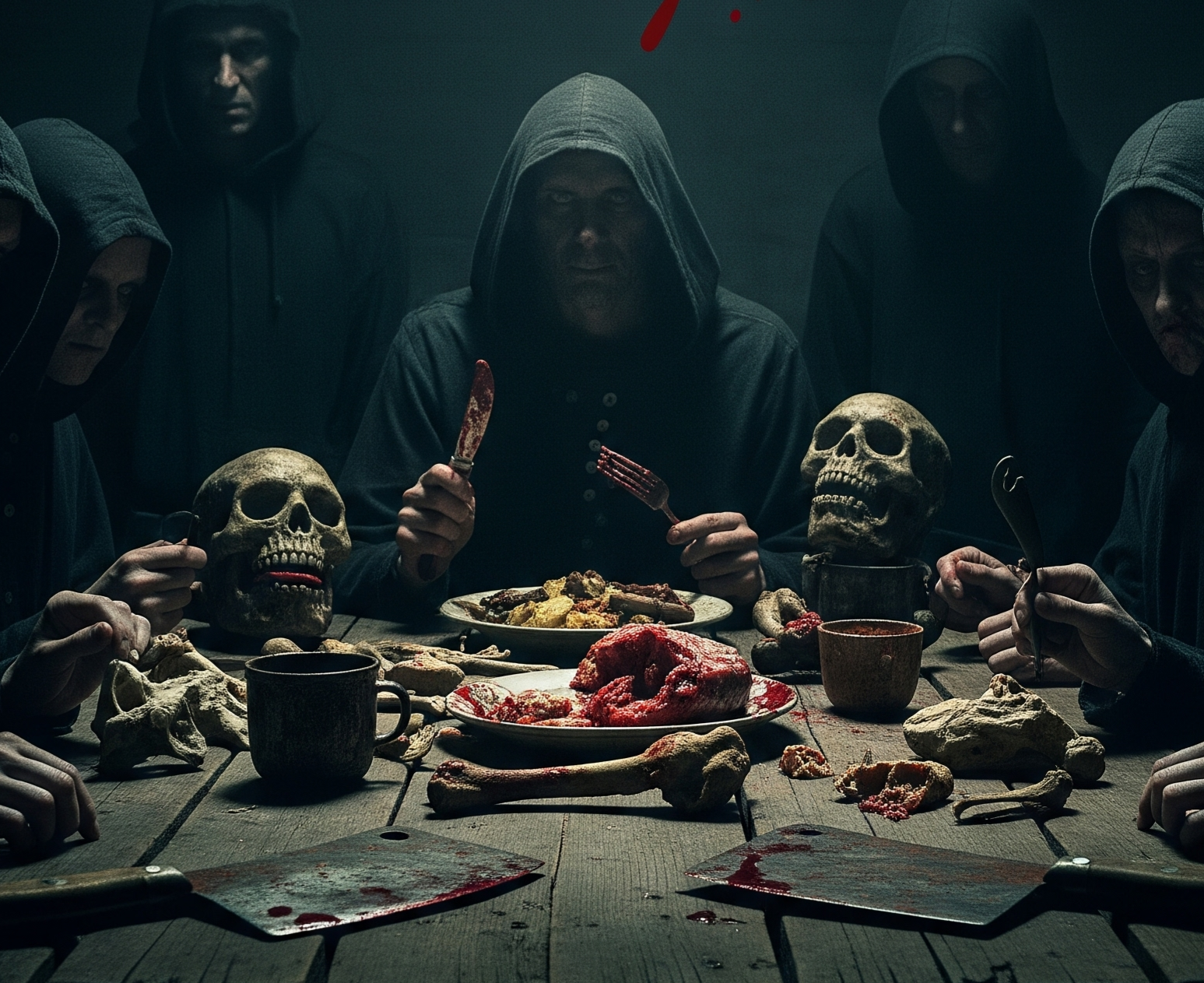
Few taboos hit the gut like cannibalism. The act of eating human flesh bypasses morality and plunges straight into primal disgust. Horror filmmakers have always known this and some of the most notorious films in history have earned their reputations not from ghosts or demons but from the sight of human beings being butchered like livestock.

Real-world horrors have always haunted the edges of these stories. The Donner party trapped in the snow. The survivors of the 1972 Andes plane crash gnawing on frozen flesh or killers like Armin Meiwes who made headlines for carving and consuming a willing victim. One of the most famous cannibals in American history, Jeffrey Dahmer, became a household name for his grotesque murders and acts of consuming parts of his victims. These truths make the cinematic horrors hit harder. Horror cinema takes those unspeakable acts and magnifies them until you can almost feel the cartilage snap and smell the iron-tang of blood in the air. Let’s dig into five films that took the taboo and put it on the big screen, blood and all.
Cannibal Holocaust (1980)
Ruggero Deodato’s notorious shocker earned its legendary status with uncompromising realism. The found footage reels show a documentary crew being dismembered like animals. The faux documentary format made audiences believe what they were watching was real. The gore effects were so convincing that Deodato was arrested under the suspicion of murder. The movie’s infamous reels show a Western film crew committing atrocities against a remote Amazon tribe, only for the tribe to take revenge in ways that made stomachs turn worldwide. Limbs are hacked off in muddy clearings, blood gushing as dismembered limbs are discarded like trash. One woman is shown impaled on a sharpened stake, the point emerging from her mouth as flies buzz around her head. Corpses are split from belly to throat, intensities yanked out with wet slaps and strung across the jungle floor. Tribespeople sink their teeth into raw, still warm flesh, their faces smeared with gore. Even decades later, Cannibal Holocaust is so transgressive that many countries refuse to screen it uncut.
Cannibal Ferox (1981)

Umberto Lenzi’s, Cannibal Ferox, went even further with lurid brutality. Marketed with the boast “banned in 31 countries,” it earned its video nasty reputation honestly. The movie portrays New York drug dealers clashing with tribes in the Amazon, but nobody remembers the plot, they only remember the carnage. A victim is hung up by hooks stabbed through his chest, his ribs crack as his weight hangs on the metal. Machetes slice through skulls, with sickening crunches, spraying grey matter and blood. In one notorious sequence, a man’s genitals are cut off and devoured raw while the victim writhes in agony. Elsewhere, torsos are split, steaming organs removed and roasted over open flame. You hear the fat sizzle, the smoke thick with the stench of cooking human flesh. Ferox was not trying for subtly, it wanted the viewers to be gagging and covering their eyes.
The Green Inferno (2013)

Eli Roth’s modern homage takes all the shock of the Italian cannibal films and translates it for the HD generation. The premise, idealistic activists kidnapped by a tribe they were trying to protect, is simple but Roth’s detail makes it unforgettable. The kill sequences are flamboyant in the brutality. The infamous butchery begins with bone knives sliding under fingernails, fingers are lopped off and tossed into waiting mouths. The victim’s eyes are scooped out as she screams, the transparent liquid rolling down her face. Her arms and legs are sawed off, one joint at a time. Her tendons audibly snapping like taut guitar strings. Her torso is split and her ribs pried apart like a butcher cracking a carcass. The tribe feasts on her still quivering organs raw. The camera holds long enough for you to see blood dripping down chins and teeth chewing the flesh. Roth’s dedication to practical effects makes the scene feel all too real, and that’s the point.
Ravenous (1999)

This cult classic takes cannibalism out of the jungle and into the snowy Sierras in the 1840s, fusing frontier history with supernatural myth. Inspired by the Donner party and the legend of the Wendigo, it follows soldiers trapped in isolation who discover the addictive power of eating human flesh. Hunger drives them to butcher fallen comrades. The film lingers on the obscene. Ribs being sucked for marrow, steaming chunks of thigh carved and roasted over an open flame. Blood drips into the snow as men gnaw on femurs like they are chicken wings. One chilling sequence shows a man savoring his first bite of human flesh, blood smears his beard as his eyes glaze with ecstasy. Ravenous blends black humor with horror but its depiction of flesh eating is no less visceral. Cannibalism is portrayed as both a means of survival and of seduction.
Silence Of The Lambs (1991) and Hannibal Lecter

Not all cinematic cannibals are feral tribesmen or starving soldiers. Hannibal Lecter is cultured, elegant and utterly monstrous. Anthony Hopkins’ portrayal made him iconic, a brilliant psychiatrist with a taste for human flesh, served with fine wine and classical music. Silence Of The Lambs only hints at his appetite but Hannibal (2001) removes all subtlety. In its most infamous scene, Lecter peels back the skull of a living man. He lifts it off like the lid on a pan. He slices pieces of the exposed brain, sautees them in butter right at the table. Then he feeds it to his victim while he is still conscious, the sizzling sound mingling with dinner conversation. It’s refined cannibalism. Organs prepared with culinary flair, flesh eaten off of fine china. What makes Lecter terrifying isn’t just the gore, it’s his civility. He reminds us that not all cannibals lurk in the jungle, sometimes they wear expensive suits and quote Dante while savoring your liver with fava beans.
Why Cannibalism Still Horrifies
What makes these films endure isn’t just the gore, but the sensory overload and assault. They make you hear the snap of bones, experience the sizzle of flesh on open flame, see lips slick with gore and marrow. Cannibalism horrifies because it isn’t supernatural…it’s human. History shows us that it happens, in starvation, madness and perversion. It forces a question you don’t want to answer: under the wrong circumstances, would you do the same? Could you one day be the one with the knife…or the one on the spit?