
“Monsters are real and ghosts are real, too. They live inside of us, and sometimes, they win.” Stephen King
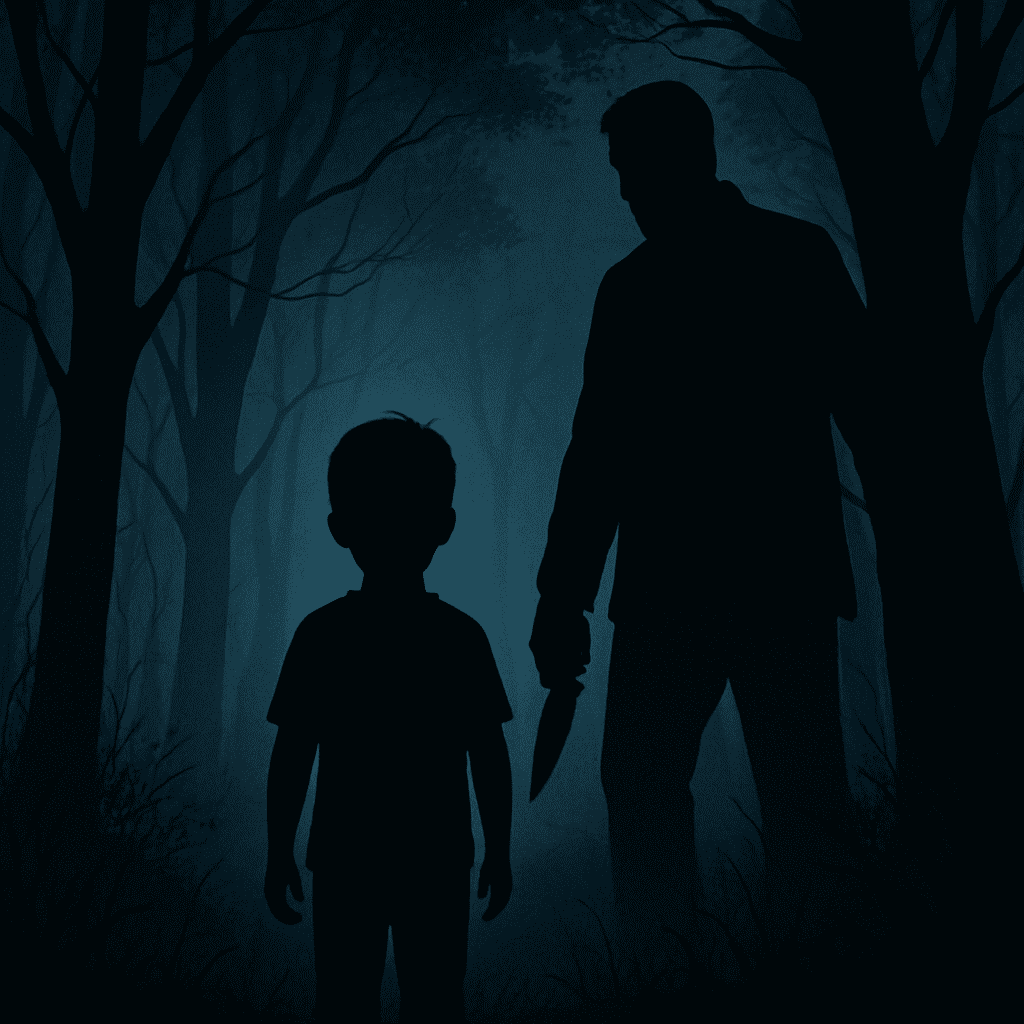
In horror films, evil often wears a mask, be it a demon, a ghost or a creature from beyond. But the most unsettling horrors do not come from the darkest depths of imagination. They are born from reality. Throughout history, certain crimes have shattered the illusions that innocence is untouchable. When children, the very symbols of purity and hope, become victims of unspeakable violence, the world is forced to confront a darkness far deeper than anything cinema can create. This article explores real-life child killers who have haunted public consciousness and examines how their monstrous deeds have echoed through the horror films that dare to look into the abyss.
The Horror Of Reality
The death of a child is one of society’s ultimate taboos. When that death is deliberate, the crime transcends simple murder. It becomes a monstrous act that challenges our deepest beliefs about humanity, innocence and evil. Real life child killers are not seen as merely criminals but as embodiments of pure malice, figures so horrifying that their stories linger in the collective, cultural consciousness for decades.
Horror movies have long since mined these real-world nightmares. They weave them into stories that allow audiences to confront their fears from the safety of a movie theater seat. But behind the fiction, real lives lay destroyed and real evil unleashed.

Notorious Real Life Child Killers
Albert Fish (1870-1936, United States)
Known by names such as “The Gray Man,” “The Brooklyn Vampire,” and “The Boogeyman,” Albert Fish remains one of the most sadistic and unsettling figures in American criminal history. A cannibal, a sadomasochist, and murderer, Fish claimed to have killed and eaten several children. His most famous crime was the murder of ten year old Grace Budd, for which he sent the victim’s mother a gruesome, detailed letter describing her death, dismemberment and preparations for cooking. Fish’s actions were not just violent but deeply ritualistic and driven by religious delusions. When arrested, he admitted to inserting needles into his own body and claimed that God had told him to kill the children. Executed by electric chair in 1936, Fish remains a spectral presence in the annals of true crime, an almost folkloric embodiment of human depravity.
Mary Bell (1968, England)
In the summer of 1968, England was rocked by a truly horrific crime. An eleven year old girl named Mary Bell had strangled two young boys, Martin Brown and Brian Howe. Her case was shocking not only for her age but for the nature of the crimes. After the murder of three year old Brian Howe, Mary returned to the scene to carve a letter “M” into the boy’s stomach with a straight razor. She openly bragged about the killing and often returned to the scene of the crime to watch the investigators. After the second killing she visited the boy’s family to ask them if they missed him. She left notes at the school describing the killings before it was publicly linked to her. Diagnosed as suffering from psychopathic personality disorder, Mary became a case study in childhood violence, trauma and the question of nature over nurture.

Ian Brady and Mary Hindley (The Moor Murders 1963-1965, England)
Brady and Hindley’s murder spree took the lives of five children, aged between 10 and 17, at least four of whom had been sexually assaulted. Their mutilated corpses were discovered in Saddleworth Moor. What made their crimes even more horrific was their methodical documentation, they recorded the final screams of their young victims and posed for pictures with the corpses. Their level of depravity and the image of Hindley’s cold unrepentant face, shocked the UK and continues to resonate in the national psyche. The sheer lack of remorse and complete coldness set a new standard for evil.
Andre Chikatilo (1960-1994, Soviet Union)
Dubbed “The Butcher Of Rostov,” Andre Chikatilo was a Soviet serial killer who murdered and mutilated over 50 women and children between 1970 and 1990. His crimes were marked by extreme violence, sexual sadism, and cannibalism. He targeted runaways, women and children, often luring them with promises of food and salvation. Chikatilo’s investigation was famously botched by Soviet authorities, allowing him to continue killing for over a decade. His eventual capture and trial were a media spectacle. Where he ranted, screamed, spit and threw himself on on the floor during courtroom proceedings. Executed by firing squad in 1994, Chikatilo remains one of the most terrifying examples of a child predator hidden in plain sight.
Dean Corll (1939-1973, United States)
Nicknamed “The Candyman,” Dean Corll was the mastermind behind the Houston mass murders, one of the most brutal child murder cases in American crime history. Between 1970 and 1973, Corll, along with his teenage accomplices, David Brooks and Elmer Wayne Henley, abducted, raped, tortured and murdered at least 28 boys. Corll would lure victims with candy or parties before chaining them to a plywood torture board. The discovery of his crimes came only after Henley turned on him and shot him dead. The horror of Corll’s homemade torture chamber and the complicity of his young accomplices became the stuff of urban legend and nightmare.
The Intersection of Real Evil and Horror Cinema
Horror movies have long borrowed from reality to amplify the horror and the killers listed above have directly or indirectly influenced some of the most disturbing stories in film and literature. While these films may not name their inspiration outright, the fingerprints of these real life killers are all over the twisted characters they influence.
Albert Fish’s Legacy In Horror Media
Fish’s crimes have inspired fictionalized portrayals in horror and true crime hybrids. The 2007 film The Gray Man is a direct dramatization of his life focusing on the manipulation of Budd’s family and the internal torment that fueled his heinous acts. Fish’s eerie matter-of-fact written confession to the mother of one of his victims remains one of the most disturbing documents in criminal history.It left a haunting legacy on horror fiction. The calm, polite tone he used while describing horrific acts helped inspire the mold for the soft spoken monster. More subtly, elements of his behavior, cannibalism, religious delusion, and child predation echo through characters in films such as SInister, Silence Of The Lambs, and The House That Jack Built.

Fish is also credited with influencing the archetype of the “unassuming man” as a vessel for pure evil. A trope used to devastating effect in films like The Black Phone and The
Poughkeepsie Tapes. His real-life persona showed how the quietest voice can carry the darkest intent, a theme horror continues to revisit.
Mary Bell and The Evil Child Trope
From The Bad Seed to Orphan, cinema is fascinated with the idea of a killer child. Mary Bell’s case remains one of the most glaring real-life examples, challenging the myth of childhood innocence. Her influence can be felt in films such as The Children (2008) and We Need To Talk About Kevin (2011) which explore the terrifying potential of childhood violence. Bell’s legacy also paved the way for horror to depict female child killers with unnerving emotional ambiguity, challenging traditional portrayals of innocence. She helped shape a horror sub-genre where children aren’t the victims, they are the predators.
The Moors Murders and The Lovely Bones
The emotional horror of losing a child and the pain of not knowing what happened is a recurring theme in horror movies. Particularly in The Lovely Bones (2009), where a murdered girl watches her family from the afterlife. While not directly based on the Moors Murders, the film shows haunting parallels: the trust betrayed, the innocence lost and the lingering presence of a killer who walked freely among neighbors.
The 1995 film, Fun, a story about two teenage girls that murder a woman for amusement, bears the emotional chill and youth-driven nihilism eerily reminiscent of the Brady and Hindley crimes. Similarly, David Peace’s novel Nineteen Seventy Four, part of Red Riding Quartet, channels the pervasive atmosphere of dread, child victimization and institutional failure that haunted the public in the aftermath of the Moor Murders.
Andre Chikatilo and Eastern European Horror
Chikatilo’s legacy can be felt in films that tap into post-Soviet bleakness. Movies such as Child 44 or Citizen X are directly based on his crimes. The film Evilenko (2004) fictionalized his sadistic murders under the guise of a quiet schoolteacher. His blend of madness, cruelty and the failure of institutions helped fuel Eastern European horror’s fascination with helplessness, isolation and bureaucratic horror. The raw brutality in films like Frontier(s) and Kalifornia borrow from the real world darkness Chikatilo embodied. His legacy influenced portrayals of predatory killers with the ability to hide their depravity under the facade of order. Chikatilo’s duality is a trope that horror embraces wholeheartedly.

Though James Ellroy’s novels are firmly rooted in American crime and political intrigue, figures like Chikatilo influence his portrayal of deeply disturbed, bureaucratically overlooked killers. In Blood’s A Rover, and other entries in the Underworld USA trilogy, Ellroy explores the convergence of systematic corruption, moral decay and psychopathy. The image of the state turning a blind eye to the darkest citizens resonates strongly with the Soviet Union’s refusal to acknowledge that a serial killer was even possible. Chikatilo’s legacy is a silent but powerful force shaping Ellroy’s brand of noir horror.
Dean Corll and The DIY Dungeon Horror Trope
Dean Corll’s influence is chillingly visible in horror media that explores torture, confinement and suburban evil. Films like The Collector, The Girl Next Door and Hostel echo the depravity of Corll’s torture board, with characters subjected to sadistic rituals in confined spaces. Corll’s disturbing manipulation of his teenage accomplices to abduct, torture and murder other youths echoes in films such as Summer of ‘84 and The Clovehitch Killer. The very idea of an intelligent, well dressed man next door that could build a chamber of horrors in his basement is a modern horror staple. One that Dean Corll pioneered in real life.
The Ethics of Representation
There is always a fine line between dramatization and exploitation. True crime is compelling because it taps into our primal fears. The fear of being hunted. The fear of innocence turning monstrous. The fear of losing control. But using real victims, especially children, as narrative fuel can be highly problematic. Horror, at its best, can provide a type of catharsis. At its worst, it risks re-traumatizing victims and glorifying the perpetrators.
When horror films draw inspiration from real like killers, especially ones as depraved as Chikatilo, Fish and Corll, filmmakers must consider whether the horror is serving a deeper reflection on evil or turning real pain into a spectacle. There is a fine line that must be walked like a tightrope.

Conclusion: The Devil You Know
The monsters in horror fiction are often dismissed as fantasy – vampires, ghosts and demons. But the monsters that haunt courtrooms, newspaper headlines and criminal archives are far more terrifying. They smile. They work. They walk among us. They are ordinary. Until they aren’t. Their atrocities reveal truths that horror movies dare to confront. That evil can wear a neighbor’s face and that children are not always innocent. That true horror doesn’t require supernatural forces, it just requires intent.
Horror thrives when it reflects our worst realities and these killers have helped to shape that reflection. Through them, the genre explores themes of corrupted innocence, broken systems and the predator lurking behind civility. The legacy of their crimes is horrifying but it’s also influential. It has fueled decades of films and stories in an attempt to make sense of senseless violence. In the end real evil doesn’t die in a prison cell, it echoes in the art we create to understand it.