
Themes
The Exorcist:
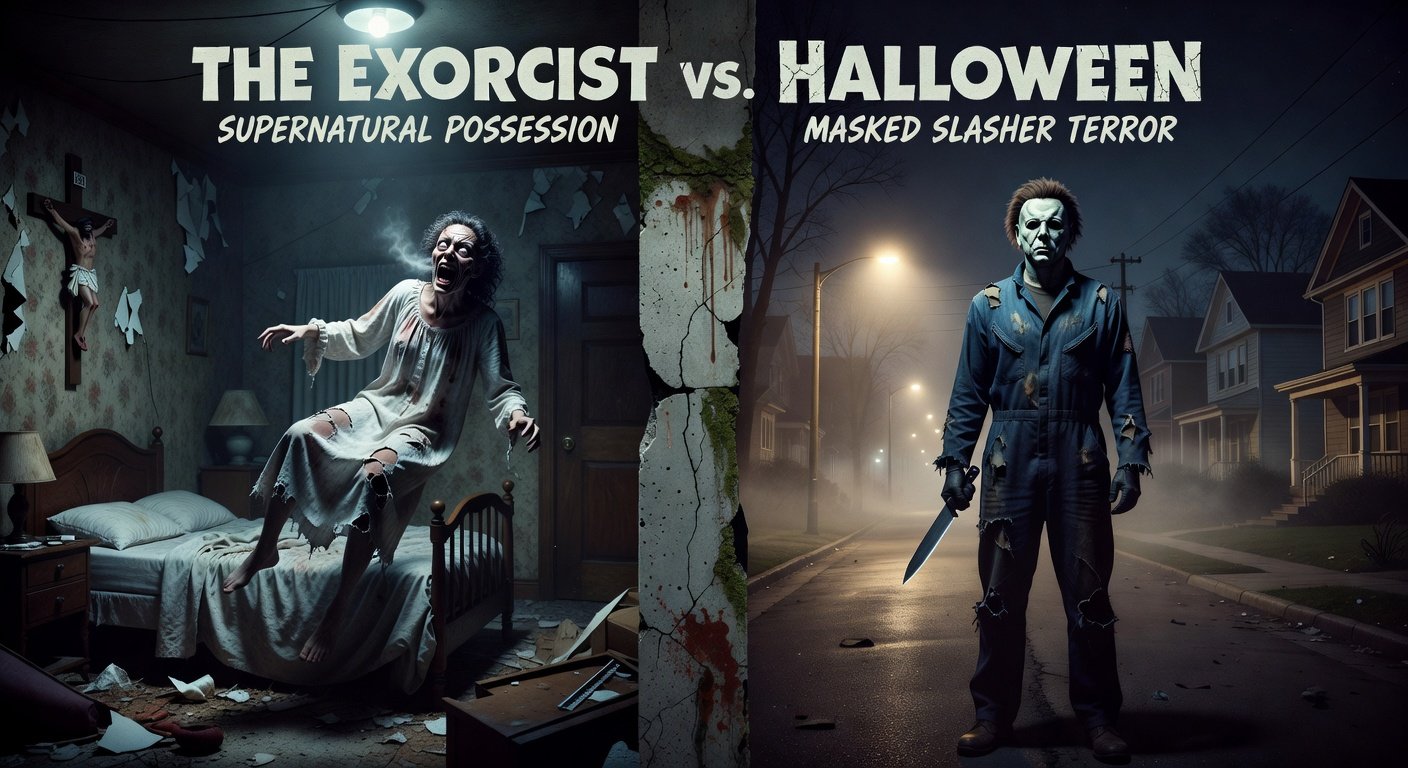
· Religious Conflict: The film explores the battle between good and evil, centered around the possession of a young girl and the subsequent exorcism performed by priests.
· Psychological Horror: It delves into fear derived from the unknown, the fragility of faith, and psychological breakdowns.
Halloween:
· Survival and Slashers: This film introduces the “final girl” trope, focusing on survival against a relentless killer, highlighting themes of innocence versus evil.
· Stalker Horror: It emphasizes the terror of being watched and pursued, creating an atmosphere of dread.
Characters
The Exorcist:
· Regan MacNeil: The innocent child possessed, symbolizing purity corrupted by malevolent forces.
· Father Karras: A troubled priest, representing the human struggle with faith and despair.
Halloween:
· Laurie Strode: The archetypical final girl, depicted as resourceful and resilient.
· Michael Myers: The embodiment of unrelenting evil, a masked killer whose motives remain largely unexplained.
Cinematic Techniques
The Exorcist:
· Visual Effects: Notable for its groundbreaking special effects that depict possession, including unsettling visuals and sound design.
· Atmosphere: A slower build-up to horror, emphasizing unease and dread with religious iconography.
Halloween:
· Point of View Shots: Introduces a voyeuristic perspective, often aligning the audience with Michael’s viewpoint, creating tension.
· Score: John Carpenter’s iconic synth score heightens suspense and serves as a hallmark of the slasher genre.
Cultural Impact
The Exorcist:
· Critical Acclaim: It garnered significant attention and accolades, often regarded as a masterpiece of horror cinema.
· Religious Debate: Sparked discussions about faith, possession, and the psychological implications of evil, leaving a lasting influence on religious horror films.
Halloween:
· Foundation of Slashers: Pioneered conventions of the slasher genre, influencing countless films that followed.
· Cultural Phenomenon: Established the template for horror films, especially around Halloween, becoming synonymous with the holiday.
Tone and Atmosphere
The Exorcist:
· Serious and Dark: Maintains a somber, reflective tone, emphasizing the gravity of spiritual and moral dilemmas.
Halloween:
· Tension and Suspense: Combines a sense of urgency and terror with occasional moments of calm, leading to sudden scares.
KO’s Thoughts:
In summary, while “The Exorcist” and “Halloween” differ significantly in their thematic focus and character archetypes, both films have left indelible marks on horror cinema. “The Exorcist” challenges beliefs and explores deep psychological fears, whereas “Halloween” revolutionized the slasher genre by establishing tropes that are now staples in horror. Together, they represent the diverse range of horror’s appeal, from psychological and supernatural terror to visceral, slasher thrills.
Horror Comparison: The Exorcist and Halloween