

When The Dead Found Their Voice In North London
By the late 1970s, Ed and Lorraine Warren had become household names among believers and skeptics alike. Their reputation for battling evil, first tested in the Perron household and with the Annabelle doll, made them both legends and targets. So when news broke of a strange disturbance in a modest council house in Enfield, North London, the Warrens crossed the Atlantic. What they found there would become one of the most debated hauntings in modern history, where a family’s suffering and the world’s obsession with proof collided under a single roof.
The Hodgson Family
It began in 1977. Peggy Hodgson, a single mother of four, lived at 284 Green street, a semi-detached house in Enfield. Her daughters, Janet and Margaret, were the first to hear the noises, scratching, knocking, furniture scraping across the floor at night. Then came the voices. A gravelly male tone began speaking through eleven year old Janet, claiming to be the spirit of a man that had died in the house.

The disturbances escalated quickly: toys hurled themselves across the room, chairs toppled and neighbors witnessed the girls levitating. Reporters, photographers and investigators crowded the small house. The haunting had gone public, turning the Hodgson’s private nightmare into a media circus.
Enter The Warrens
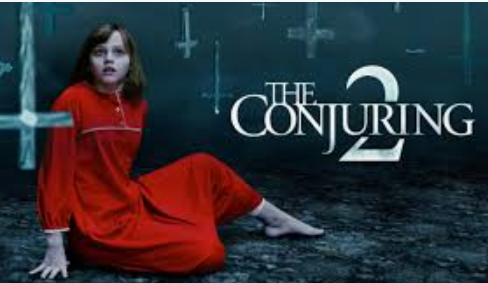
Though portrayed as the lead investigators in The Conjuring 2 (2016) Ed and Lorraine Warren were only briefly involved with the Enfield case. The haunting was chiefly handled by Maurice Grosse and Guy Lyon Playfair of the Society For Physical Research, both of whom spent years documenting the case.
The Warrens, however, did visit. According to Playfair, they arrived uninvited, offering help. But were turned away. Lorraine would later claim she felt an overwhelming sense of evil in the home and suspected that the haunting was demonic. Whether their presence made an impact or simply added another layer to the legend depends on who you ask.
Skepticism and Spectacle
From the moment news broke, Enfield became a battlefield between belief and ridicule. The Daily Mirror splashed it across front pages. Photographers captured furniture flipping and children screaming and investigators with tape recorders flooded the narrow hallways. The world was fascinated. Two girls, a grieving mother and a house that refused to behave.

But for every believer, there was a skeptic. Many insisted that Janet was a talented mimic and even Margaret faked the voices to keep attention on their fractured family. Some reporters claimed they caught the girl’s bending spoons, tossing objects when they thought no one was watching. Even Maurice Grosse, who defended them fiercely, admitted there were moments of doubt. “You can’t fake 98 percent of it,” he said in a BBC interview, “but you can’t say two percent wasn’t.”
Still, there were nights that defied reason. Furniture moved in full view of witnesses, when deep growls came from out of nowhere and Janet was physically lifted and thrown across the room like a rag doll. The haunting was unpredictable, chaotic and deeply human. It wasn’t the clean cinematic possession that Hollywood would craft. Instead it was exhaustion, grief and fear playing out in a working class home that could barely hold itself together.
The Aftermath
By 1979, the activity slowed as suddenly as it began. Janet, now a teenager, said the voices eventually left her but she never truly ever felt alone. Years later, she described the haunting not as evil but as a presence she learned to understand. It was a force that wanted to be heard more than it wanted to harm.
The house became quiet but the history never faded. New tenants reported small disturbances, whispers in the night and toys rolling across the floor. Nothing ever violent or malevolent. Just felt like reminders that the home owners were not alone.

As for the Warrens, their brief involvement was expanded into myth by The Conjuring 2, turning a fleeting visit into a spiritual confrontation that never happened. Yet in doing so, the film captured something true about the Warren’s work, their unwavering belief that the line between the living and the dead was thinner than most dared to imagine.
Epilogue
The Enfield haunting remains one of the most documented paranormal cases in history and one of the most disputed. Whether it was poltergeist, possession or performance, it left behind echoes that never quite died out. The Hodgsons moved on, the house still stands and the story still breathes through every re-telling, every film reel and every whisper that something once stirred in Enfield and refused to rest.