

For more than half of a century, Ed and Lorraine Warren stood at the uneasy crossroads between faith and fear. To believers they were spiritual warriors armed with rosaries and resolve, to skeptics, they were master storytellers spinning the supernatural into spectacle. Whatever they were, their work inspired some of the most enduring tales of modern horror and Hollywood took notice.
This four part series, The Conjuring Files, revisits the real cases that became the backbone for The Conjuring films. It peels back the celluloid to uncover the human stories beneath the hauntings. The families that lived through them and the investigators who claim to battle what the rest of us could not see.
It begins with a farmhouse in Rhode Island, where one family’s nightmare would birth a cinematic legend.

The Perron Haunting – The Real Story Behind The Conjuring
Before The Conjuring (2013) became a global sensation, it was a cold case from the Warren’s files. It was a haunting so severe that they claimed it tested their faith. What unfolded in the early 1970s at a farmhouse in Harrisville, Rhode Island, would later inspire the movie that launched an entire cinematic universe. But behind the demonic theatrics lies a family’s genuine terror, the Perrons. A family whose accounts still blur the line between haunting and hysteria.
The House On Round Top Road
In 1971, Roger and Carolyn Perron moved with their children to a sprawling, weathered farmhouse on Round Top Road. The property carried more than two centuries of history; births, deaths and whispered tragedies that clung to the beams. The first signs of disturbance were small. Misplaced books and hairbrushes. Faint knocks on the walls and doors opening without a draft. Then came the cold spots. The smell of rot and shadows that moved against the light.
Soon the five Perron girls began seeing full apparitions. Pale figures floating through the rooms and murmuring voices they didn’t recognize. Carolyn, the mother, complained of unseen hands tugging at her hair while she slept and a sharp pain in her calf that left bleeding punctures. One night she claimed to be violently attacked. She said that something lifted her and threw her across the room.
The family’s terror grew as rumors surfaced of a woman named Bathsheba Sherman, said to have lived nearby in the 1800s. Local legend accused her of witchcraft and infant sacrifice. These stories were rooted in folklore, not record. Bathsheba was a real woman but there is no historical evidence of any crimes being committed. Still, her name would be forever connected to the darkness within that house.
Enter The Warrens
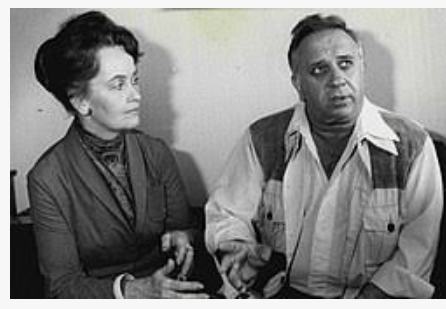
Desperate, the Perrons sought help from Ed and Lorraine Warren, who had already gained notoriety in Amityville, New York. Lorraine, a clairvoyant, claimed that she immediately sensed a malignant energy in the Harrisville farmhouse. Ed concluded that the property was cursed by a demonic entity that thrived on human suffering and Bathsheba was its anchor.
In 1974, the Warrens held a seance in the Perron home. In House of Darkness, House of Light (three series memoir) Andrea Perron, the eldest daughter, describes a terrifying seance. It was a chaotic event, during which her mother, Carolyn, appeared to be overtaken by a violent force. She spoke in an unfamiliar voice, her chair levitated and she was thrown to the floor. Andrea says her father, Roger, was furious and terrified, believing that the seance put his wife and family in more danger.
Roger reportedly told Ed and Lorraine Warren to leave immediately and never come back. He feared that their intervention made things worse. The Warren’s version of events is a bit more subdued. Lorraine stated that they were “asked to leave” after the seance but denied that it ended violently or that they were forcibly thrown out.
Following the Warren’s abrupt departure, the disturbances gradually lessened. The haunting never ended but the violence eased. Its fury seemed to fade when the investigation was over.
Fact VS Fiction
James Wan’s The Conjuring transforms these events into polish cinematic dread. A full blown possession narrative complete with demonic shrieks, exorcisms and the Warrens as spiritual saviors. In reality there was no exorcism, only that single seance and no evidence that Bathsheba was ever a witch.
Where the movie sees the Warren’s triumph through faith and heroism, the historical record is a bit murkier. It paints a picture of confusion, trauma and deep human fear. For the Perrons, there were no clear victories, only endurance.

The Aftermath
The Warren’s departure did not end the haunting, it merely dulled it for a while. The Perrons continued to live in the house until 1980, learning to live alongside with whatever lingered there. Some nights were calm, others heavy with the sense of being watched. Andrea Perron would later describe it in her memoirs as “a slow possession of time.” It was as if the family had become part of the house’s story rather than its victims. When they finally left, it wasn’t in triumph but in quiet surrender.
Today, the farmhouse has become a commercialized haunting ground, known simply as The Conjuring House. Paranormal investigators and thrill seekers pay to spend the night, chasing the story that terrified the Perrons and captivated the world. Many leave claiming to have heard whispers, felt chills and seen shadows moving on their own.

The Warren’s Legacy
The Conjuring established Ed and Lorraine Warren as icons of spiritual warfare but also reignited debate over the authenticity. Were they genuine crusaders against evil or sensationalists with a flair for the dramatic? The truth likely lies between.
Whatever the answer, the Harrisville haunting remains the cornerstone of their legend. It was the case that turned two New England investigators into symbols of cinematic terror.