
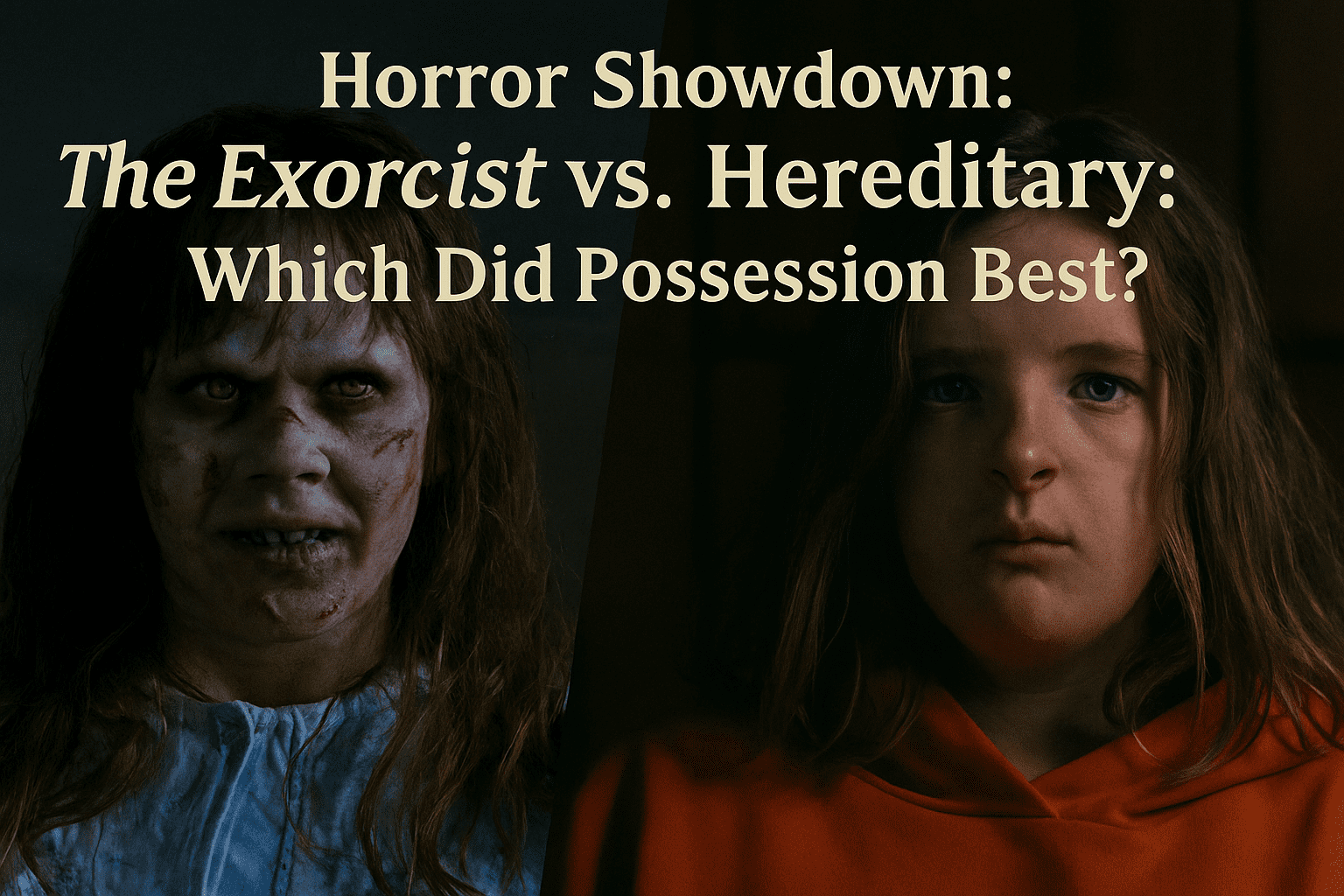
Horror films come in all shapes and sizes, but there’s one theme that remains endlessly terrifying: possession. Whether it’s a demon overtaking a child’s body or a malevolent spirit sinking its claws into a family, the idea of losing control of one’s mind and body is enough to send chills down anyone’s spine. In this showdown, we’re pitting two heavyweights of the genre against each other—The Exorcist (1973) and Hereditary (2018). Both films have terrified audiences and left a lasting impact on horror cinema, but which one did possession best? Let’s break down these two chilling tales of supernatural horror and see which one truly captures the essence of possession.
Background: A Tale of Two Terrifying Films
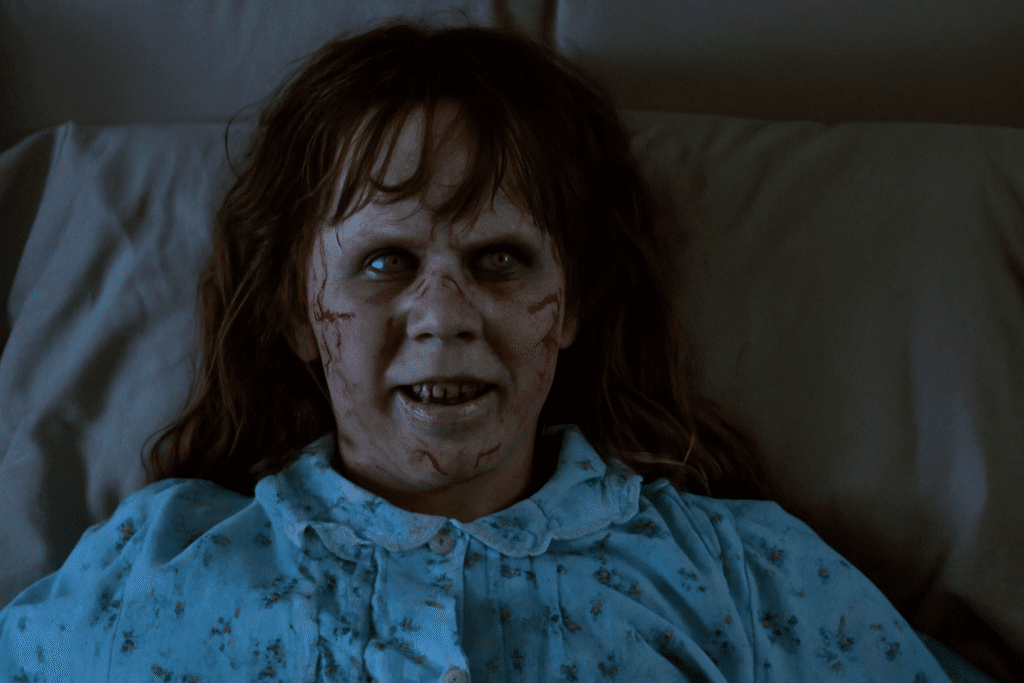
The Exorcist (1973) needs no introduction. Directed by William Friedkin and based on the novel by William Peter Blatty, it remains one of the most iconic horror films of all time. It follows the story of Regan MacNeil, a 12-year-old girl who becomes violently possessed by a demon. Her mother, Chris, and a team of priests must fight to save her from the terrifying grip of the supernatural force. When The Exorcist hit theaters, it was a game-changer—ushering in a wave of demonic horror and setting the standard for possession films to come. With its unsettling atmosphere, shocking scenes, and ground-breaking visual effects, it became a cultural phenomenon.
Fast forward 45 years, and Hereditary, directed by Ari Aster, arrived on the scene. The film follows the Graham family, who, after the death of their matriarch, begin to uncover disturbing secrets about their lineage. The central figure of this haunting tale is Charlie, the young daughter, who becomes linked to her family’s dark and terrifying history. While Hereditary isn’t strictly a possession film in the traditional sense, it deals heavily with themes of demonic influence, inherited trauma, and the supernatural—a form of possession that runs deep in the family bloodline. Aster’s slow-burn horror combined with shocking imagery has cemented Hereditary as a modern horror classic.
Main Comparison
Characters: The Demonic vs. The Inherited
When it comes to the central characters of these films, The Exorcist offers us Regan, the innocent child whose possession is both physically and emotionally brutal. She starts as a sweet, playful girl before the demon takes control, transforming her into a violent, unpredictable force. Her personality is swallowed up entirely, leaving only the demon behind. Regan’s possession isn’t just scary because of the supernatural elements; it’s terrifying because she becomes an entirely different person—someone we love and care for, now utterly unrecognizable.
In contrast, Hereditary‘s Charlie is also an innocent child, but her connection to the supernatural is more subtle—more about what lies beneath the surface of her family’s history. Charlie doesn’t go through the same visible, dramatic transformation as Regan, but her fate is sealed by her inherited connection to the demonic forces lurking in her bloodline. Instead of a single dramatic moment of possession, Charlie’s transformation feels more like a slow descent into something inevitable. She’s haunted by the legacy of her family and the spirit that has taken root within it.
Both characters are memorable, but Regan’s sheer transformation, complete with the iconic head-spinning and projectile vomiting, cements her as one of horror’s most recognizable figures. Charlie’s disturbing quietness and eerie behavior, however, gives her an air of psychological dread that makes her equally terrifying, though in a different, more creeping way.
Themes: Supernatural vs. Psychological Terror
In terms of themes, The Exorcist is squarely in the realm of supernatural horror. The film leans heavily on the battle between good and evil, with the exorcism itself acting as the ultimate confrontation between a demon and the forces of religious faith. The possession of Regan is almost entirely external—the demon enters her body and takes over, resulting in physical and psychological torment. The theme is clear: this is a fight against a powerful and malevolent supernatural force, one that exists outside the realm of human understanding.
Hereditary, on the other hand, is far more nuanced. While there’s certainly a supernatural element, the film’s central theme is psychological terror. The possession here is not just about external forces taking control of a body but also about the trauma, guilt, and hereditary curses that shape a family’s fate. The psychological breakdown of the Graham family is the true horror, with the supernatural aspect being more of a metaphor for their inability to escape their past. While there’s still a literal possession by dark forces, the psychological depth of Hereditary elevates its horror, showing how much the past can haunt and possess us—even if we try to escape it.

Impact: Shaping the Genre
The Exorcist set the standard for possession films. Its cultural impact cannot be overstated—it terrified audiences, sparked debates about the nature of evil, and became a touchstone for horror fans. Even today, it remains a benchmark for supernatural horror, influencing countless films, from The Conjuring to The Exorcism of Emily Rose. Its scenes have become iconic, and the idea of possession—complete with head-spinning, creepy voices, and exorcism rituals—has become synonymous with horror.
Hereditary, while more recent, has already made a huge impact. It’s a prime example of a film that defies genre expectations, combining elements of psychological drama and supernatural horror to create something uniquely unsettling. Hereditary doesn’t just play on the fear of possession; it explores the fear of what we inherit from our families—both in terms of mental health and the supernatural. It’s a film that’s resonated with critics and fans alike, and its influence can be seen in films that focus more on atmospheric dread and psychological horror, like Midsommar and The Witch.
Which Is Better?
So, which film did possession best? While both films offer masterful takes on horror, The Exorcist stands out as the definitive possession film. It created the template for demonic possession in cinema and continues to be the standard by which all possession movies are judged. Its lasting cultural influence and terrifying imagery still resonate with audiences today.
That said, Hereditary offers a fresh take on the possession concept, focusing on the psychological and familial aspects of possession rather than just the external battle with evil. It’s a slow burn, but its impact is just as powerful, and in many ways, it represents the modern evolution of horror, blending psychological depth with supernatural elements.
Ultimately, both films have their merits. The Exorcist is the classic, the one that defined the genre, while Hereditary brings something new to the table, offering a deeper and more complex take on possession. If you want pure, spine-chilling possession horror, The Exorcist is your winner. But if you’re looking for a more cerebral, unsettling experience, Hereditary takes the crown.
What do you think—does The Exorcist still reign supreme, or has Hereditary found a place in the possession horror pantheon? Drop your thoughts in the comments or let’s chat about it on social media. Whether you’re team Regan or team Charlie, one thing’s for sure—these two films will continue to haunt us for years to come.