

Hollywood loves money but it has never fully understood horror. Studios throw massive budgets at spectacle, convinced that terror must be engineered through expensive sets, elaborate effects and recognizable stars. Yet for decades, the most profitable horror films ever made have come from the polar opposite end of the industry. Productions held together with borrowed equipment, unknown actors and filmmakers who had more nerve than budget.
Horror does not require luxury. It requires discomfort, tension and the sense that something is wrong. Those things are remarkably cheap to create. Time and again, films made for the cost of a modest house have gone to earn millions, sometimes hundreds of millions. This proves that fear is one of the most reliable investments in cinema.
The truth is simple and slightly embarrassing for Hollywood: some of the scariest films ever made were produced by people that could barely afford to make them.
Made On Nerve and For Pennies
Long before cheap horror became a dependable goldmine, independent filmmakers were proving that raw fear could be made for almost nothing and sold for a fortune.
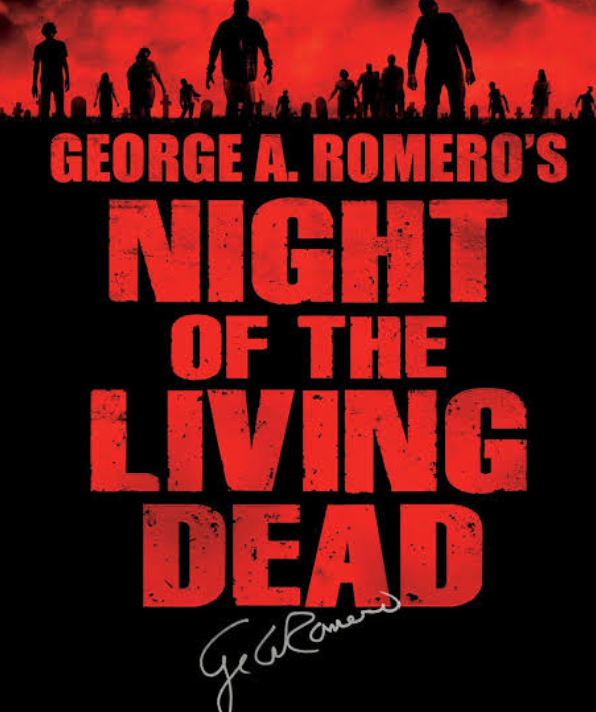
In 1968, Night Of The Living Dead clawed its way into theaters on a budget just a little over $100,000. Shot in stark black and white with local actors and minimal resources, George Romero’s bleak vision of the undead felt less like horror and more like a documentary. It earned millions globally and reshaped the zombie genre for generations to come. He proved that atmosphere and dread were far more valuable than polish.
A few years later, The Texas Chainsaw Massacre arrived looking like something recovered from a crime scene. Produced for roughly $140,000 under brutal Texas heat, the film’s set was packed with real animal bones and suffocating conditions that left cast and crew exhausted. The discomfort bled into every frame. Audiences recoiled, then returned in droves. The film earned tens of millions and became one of the most profitable and influential films of the 1970s.
Then in 1978 came Halloween, made for about $300,000 with a repainted Captain Kirk mask and a minimalist piano score composed by John Carpenter himself. Set in ordinary suburban streets and driven by pure tension rather than spectacle, it transformed simplicity into terror. The film grossed over $70 million initially and launched a massive franchise. It essentially defined the modern slasher, proving once again that fear thrives in familiar places.
By 1981, The Evil Dead pushed low-budget filmmaking to manic extremes. Sam Raimi and his collaborators scraped together roughly $375,000, built homemade camera rigs and endured punishing conditions inside a remote cabin. Fake blood flowed in ridiculous quantities. Equipment failed. Morale wavered. Yet the finished film possessed a wild, dangerous energy audiences could not ignore. It became a cult phenomenon and a financial success, creating a franchise and a major directing career.
These films shared an advantage: they felt real. Without glossy studio sheen, they carried a rough authenticity that made everything more unsettling. Viewers weren’t watching polished entertainment. They were watching nightmares captured cheaply and effectively.
Microbudget. Maximum Carnage
By the late 1990s, cheap horror evolved again, this time into a marketing and profit machine.
When The Blair Witch Project appeared in 1999, it looked like a student project. Shot largely with handheld cameras and unknown actors on a tiny budget, it relied almost entirely on suggestion. Clever internet marketing convinced many viewers that the footage might be real. The result was a global phenomenon that earned nearly $250 million and redefined what microbudget horror could accomplish.

A few years later, Paranormal Activity (2007) proved the formula could be even leaner. Produced for roughly $15,000 inside a suburban home, it used static cameras, silence and creeping dread to terrify audiences. When released widely, it exploded into one of the most profitable films ever made, earning nearly $200 million and launching a long-running franchise.
Studios quickly realized what independent filmmakers had known for decades: contained horror offers massive returns. Saw (2004) proved it with brutal efficiency. Produced for just under $1 million and set largely inside a grimy room, the film relied on mounting tension and a now iconic twist ending to grip audiences. It went on to earn more than $100 million worldwide and launched a franchise that would generate staggering returns for years. With minimal locations, mostly unknown actors and sheer nerve, Saw demonstrated that a lean, ruthless concept could transform spare change into a cinematic empire.
Cheap horror was no longer accidental success, it had become a deliberate strategy. Keep costs low, concepts strong and audiences reliably show up.
Chaos, Clowns and Cash
Even with studios trying to systemize low-budget horror, the genre still thrives on unpredictability. Some of its biggest moneymakers succeed because they are outrageous, brutal or simply impossible to ignore.
Few films embody profitable absurdity like Sharknado (2013). Made for a modest television budget and built on a ridiculous premise, a tornado filled with man eating sharks, it exploded into a social media sensation. Viewers came into it out of curiosity but were enthusiastic. Ratings soared. Sequels followed. A franchise was born from pure chaotic fun.

At the opposite extreme, Terrifier (2016) proved that raw, uncompromising brutality could still pack theaters. Produced for a fraction of most studio budgets, the ultra gory independent film gained notoriety through word of mouth and controversy. It went on to earn millions and stunned industry observers who underestimated how hungry audiences remain for horror that feels genuinely dangerous.
Cheap horror continues to thrive because it feels less manufactured. Without enormous budgets to protect, filmmakers can take risks. They can push boundaries. They embrace strange concepts and uncomfortable imagery. The result often feels more personal. More unsettling than anything created by a committee.
Fear Is Always Affordable
The continued success of low-budget horror reveals a truth Hollywood keeps learning the hard way: fear is psychological not financial. Expensive effects may impress, but they are not required to disturb. A confined space, a simple idea or an unfamiliar sound can be far more powerful than any digital spectacle.
Somewhere right now, a filmmaker with almost no budget is building the next profitable nightmare in a borrowed location with improvised equipment and a small but dedicated crew. History suggests they may succeed. Because horror has never depended on wealth to thrive, only imagination, nerve and the understanding that fear, once captured on film, can be sold for far more than it cost to create it.